
Construction & Infrastructure Robots
Site Surveying, Structural Work & Safety Automation
Last updated 29 September 2026
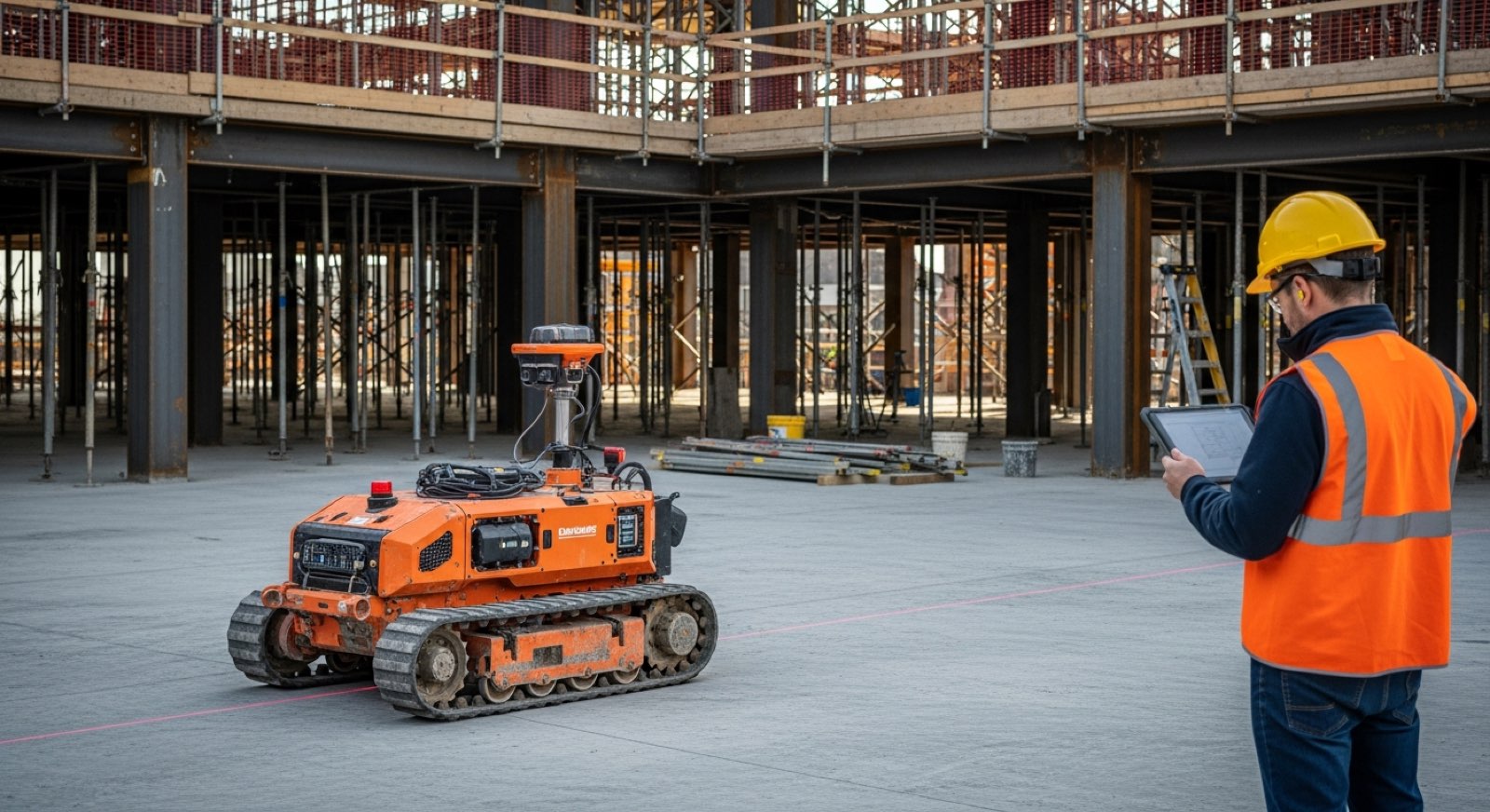
What are construction robots?
Construction and infrastructure robots survey sites, lay out building plans, assist with bricklaying, rebar tying, and demolition, and inspect structures and utilities that are hazardous or hard for people to reach.
Best construction robots in the UK
View all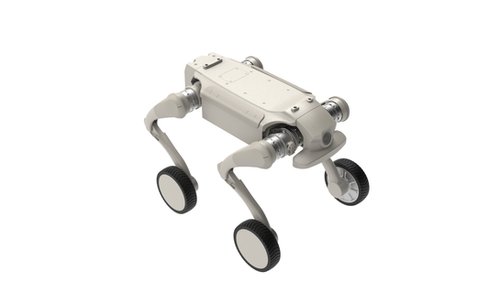
AGIBOT D1 Ultra-W IP54
The AGIBOT D1 Ultra-W IP54 is a compact wheeled-legged quadruped platform for inspection, security, emergency-response support, research and custom payload development. AGIBOT's official Ultra-W development guide specifies a 22 kg body, 16 total degrees of freedom (four per leg), a 5 kg rated payload, 3.7 m/s maximum speed, 1-2 hours of runtime and 9 km range. Its hybrid mobility envelope includes continuous stair climbing up to 16 cm, a 35 cm jump, maximum climbing height of 60 cm, and 30° standard or 40° extreme-condition slope capability. The 43.2 V, 4.6 Ah battery charges in about one hour. IP54 protection and a 0°C to 40°C operating range support mixed indoor and sheltered outdoor work. A 1080p wide-field camera, standard IMU, Wi-Fi 5.0, Bluetooth 5.0, Gigabit Ethernet, USB, power, SBUS and UART interfaces, real-time video and an official high-level SDK support teleoperation and secondary development. Packaged autonomous navigation, obstacle avoidance, fleet management and autonomous charging are not published as standard functions.
View Listing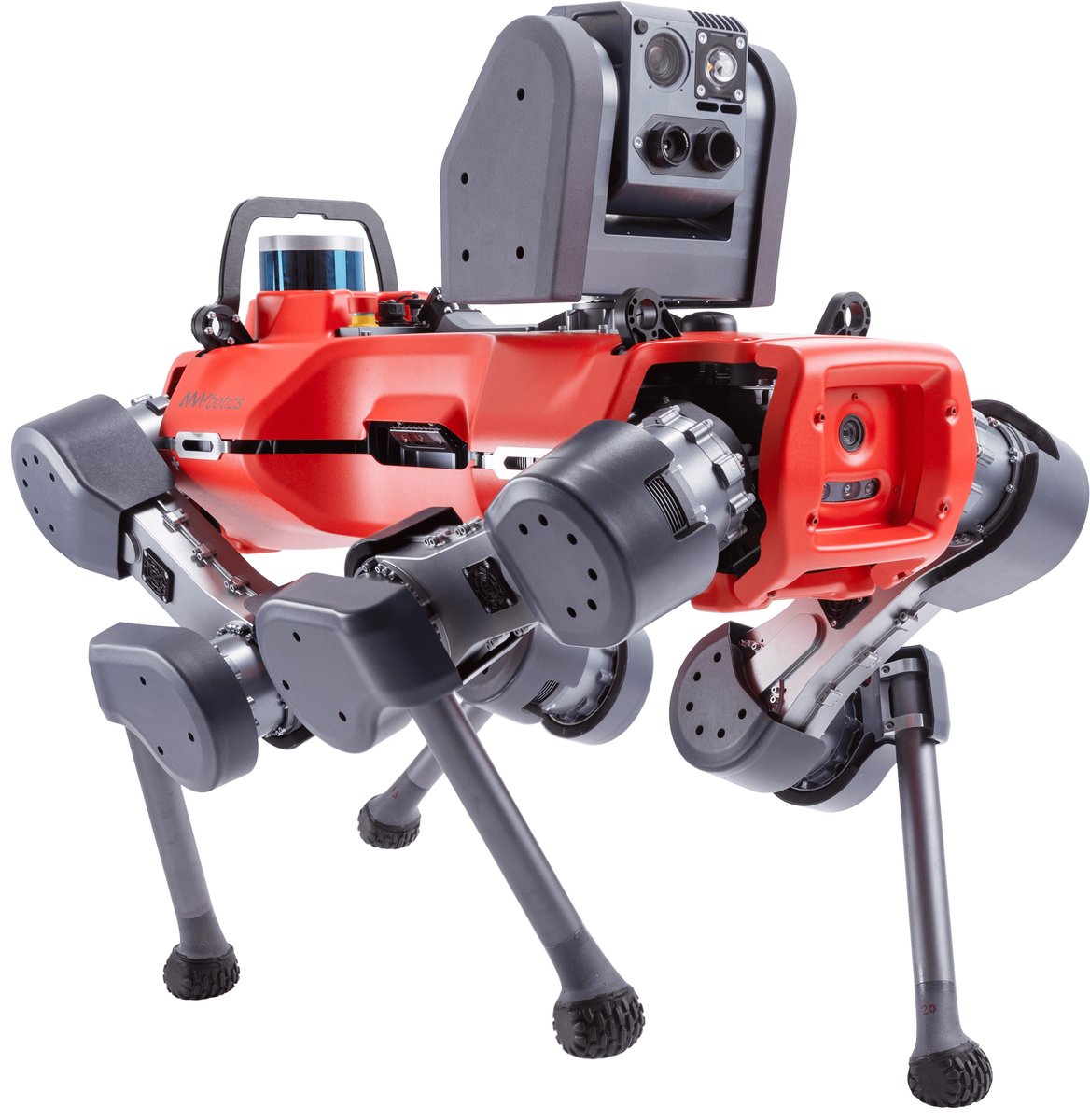
ANYbotics ANYmal D
ANYmal is an autonomous inspection quadruped engineered for harsh, industrial sites. It captures repeatable data (thermal, acoustic, visual), improving uptime and worker safety.
View Listing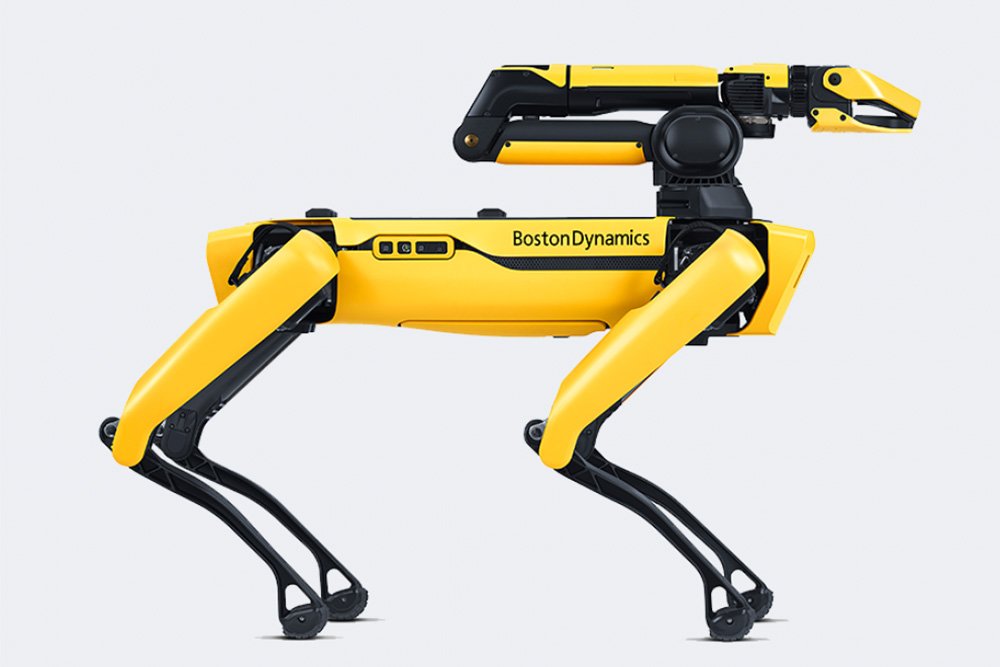
Boston Dynamics Spot
Spot is a proven industrial quadruped for inspection and data capture. It climbs stairs, handles rough terrain and carries modular payloads for repeatable autonomous routes across plants, sites and tunnels.
View Listing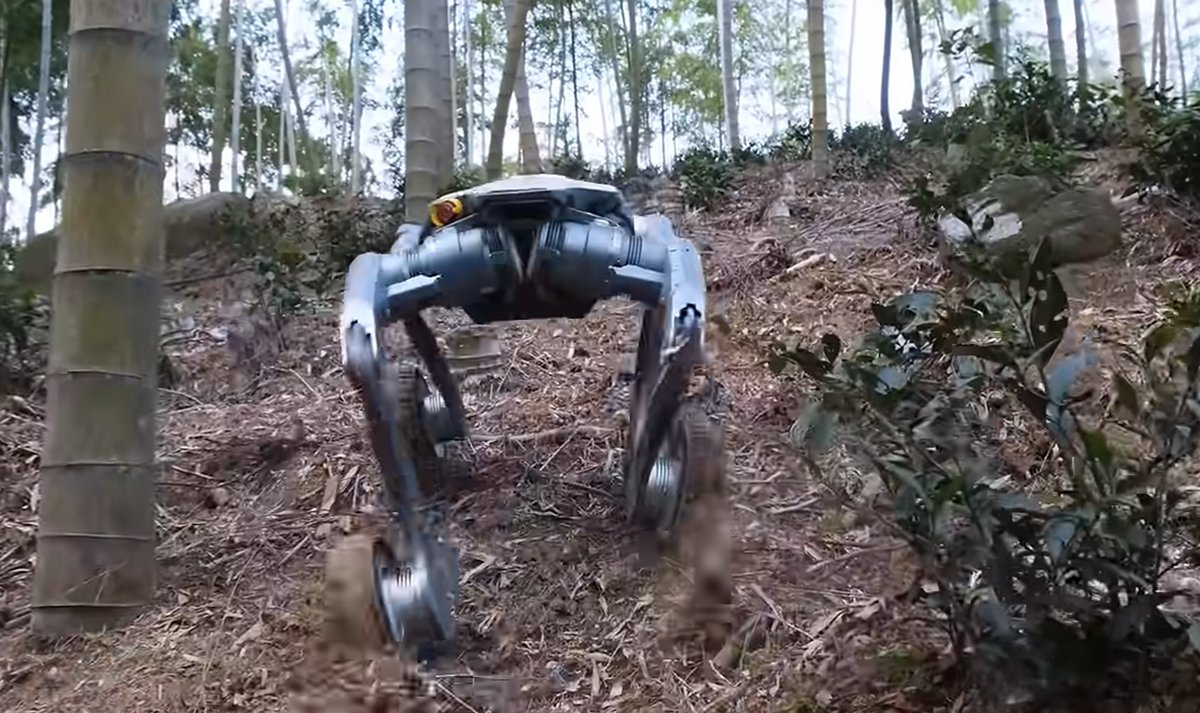
DEEP Robotics DEEPRoboticsLynx
DEEPRoboticsLynx is a compact wheel-legged all-terrain quadruped designed to combine the speed and range of wheels with the obstacle access and posture control of articulated legs. It carries up to 12 kg, reaches 5 m/s, runs for up to 3 hours or 15 km, and can negotiate continuous 22 cm steps and platforms up to 80 cm. Its official configuration includes dual hot-swappable batteries, a 1080p wide-angle camera, Wi-Fi image transmission, GPS, app and handheld-remote support, IP54 protection and operation from -10 to 40 deg C. For buyers, its main value is fast mixed-terrain mobility for payload transport, remote field observation, exploration and access to routes that are inefficient for conventional AMRs or foot-only quadrupeds.
View Listing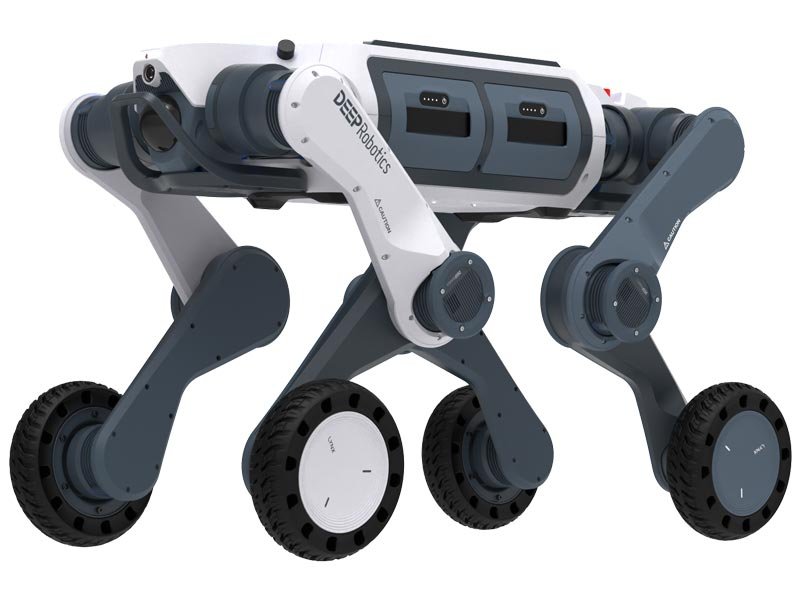
DEEP Robotics LYNX M20
The DEEP Robotics LYNX M20 is an industrial wheel-legged quadruped designed for power inspection, emergency rescue, logistics delivery, scientific exploration and other work across difficult terrain. It combines wheeled speed with legged mobility, carrying a rated 15 kg payload while operating across stairs, steep slopes, mountains, wetlands, rubble and narrow passages. The current official specification adds dual 96-line LiDAR, wide-angle cameras, autonomous navigation, omnidirectional obstacle avoidance, IP66 protection, hot-swappable batteries and optional autonomous charging. For operators, its main value is covering larger and harder-to-access sites while reducing repeated human entry into hazardous or physically demanding environments.
View Listing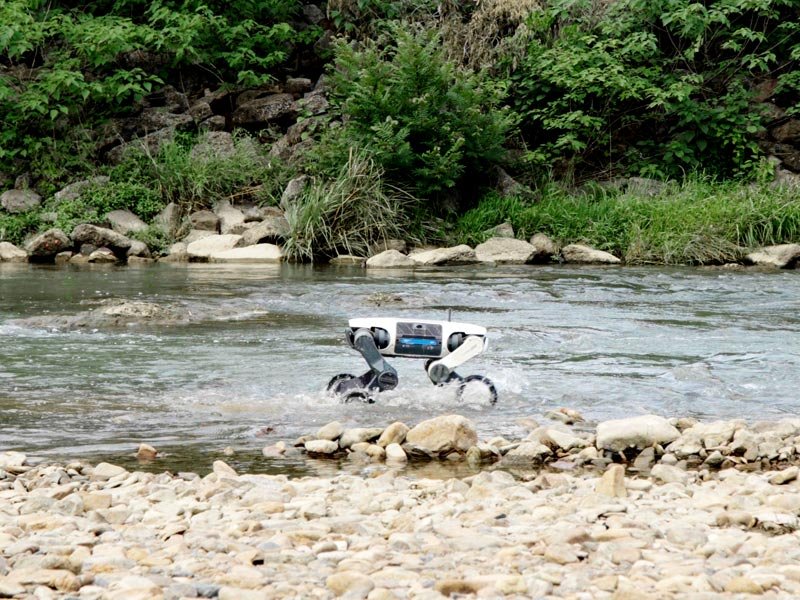
DEEP Robotics LYNX S10
The DEEP Robotics LYNX S10 is a compact wheeled-legged quadruped designed for lightweight professional tasks in narrow, rugged and weather-exposed environments. Weighing no more than 20 kg including its battery, it is intended for rapid one-person deployment and can move through narrow passages and rubble gaps while reaching a stated flat-ground speed of 8 m/s and crossing obstacles up to 500 mm high. Its omnidirectional perception, autonomous mapping, localisation, path planning and intelligent obstacle avoidance support assigned inspection or patrol tasks with reduced operator intervention. IP66 protection and operation from -20 to 55 deg C make it relevant to power inspection, security patrol, emergency response and education or research workflows, subject to site, safety and payload validation.
View Listing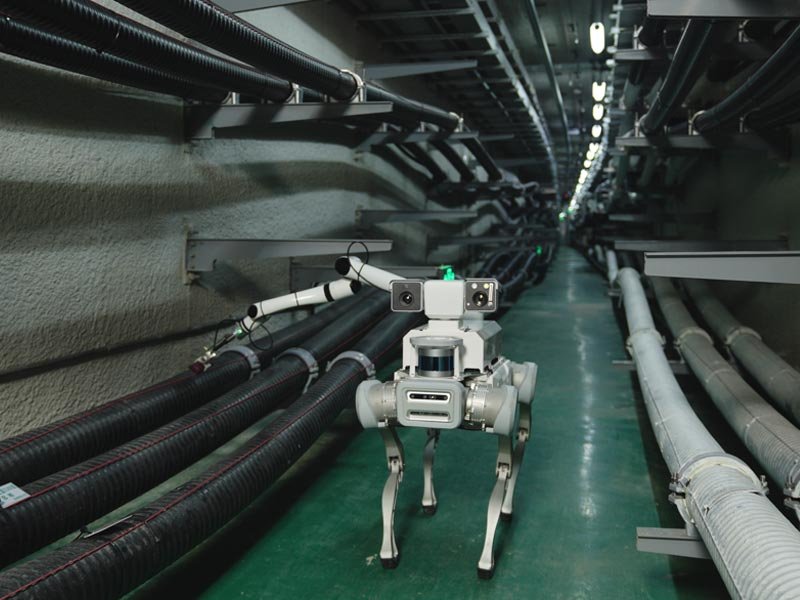
DEEP Robotics X20
The DEEP Robotics X20 is an industrial quadruped robot designed for autonomous inspection, remote reconnaissance and data collection in complex or hazardous environments. Its IP66-rated body and legged mobility allow it to traverse stairs, 20 cm obstacles, slopes and mixed outdoor terrain that can be difficult for wheeled platforms. LiDAR, depth vision and optional inspection or communications payloads support industrial patrol, emergency response and infrastructure workflows, while autonomous navigation and charging can reduce repetitive site walks. For deployment, buyers should validate local certifications, operating-temperature limits, payload integration, data handling and service coverage for the intended market and site.
View Listing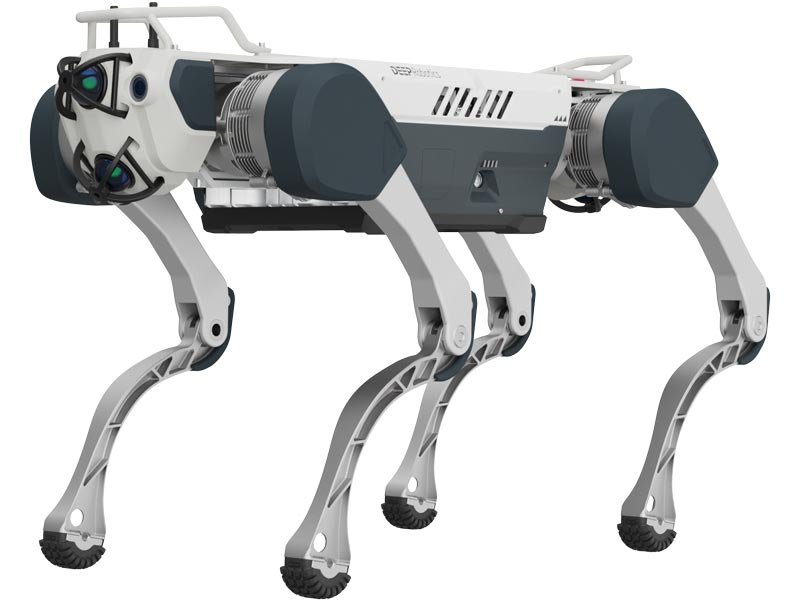
DEEP Robotics X30
The DEEP Robotics X30 is an industrial quadruped robot designed for inspection, reconnaissance, security, surveying and emergency-response work in demanding indoor and outdoor environments. It combines IP67 protection and a -20 to 55 deg C operating range with mobility over 45-degree stairs, open-grate industrial stairways and obstacles of at least 200 mm. Its integrated perception supports autonomous navigation in darkness, strong light, flickering conditions and even without an external light source, while quick battery replacement and autonomous charging support longer inspection workflows. For operators, its main value is reaching complex or hazardous areas, collecting inspection data and reducing repetitive or high-risk manual site access.
View Listing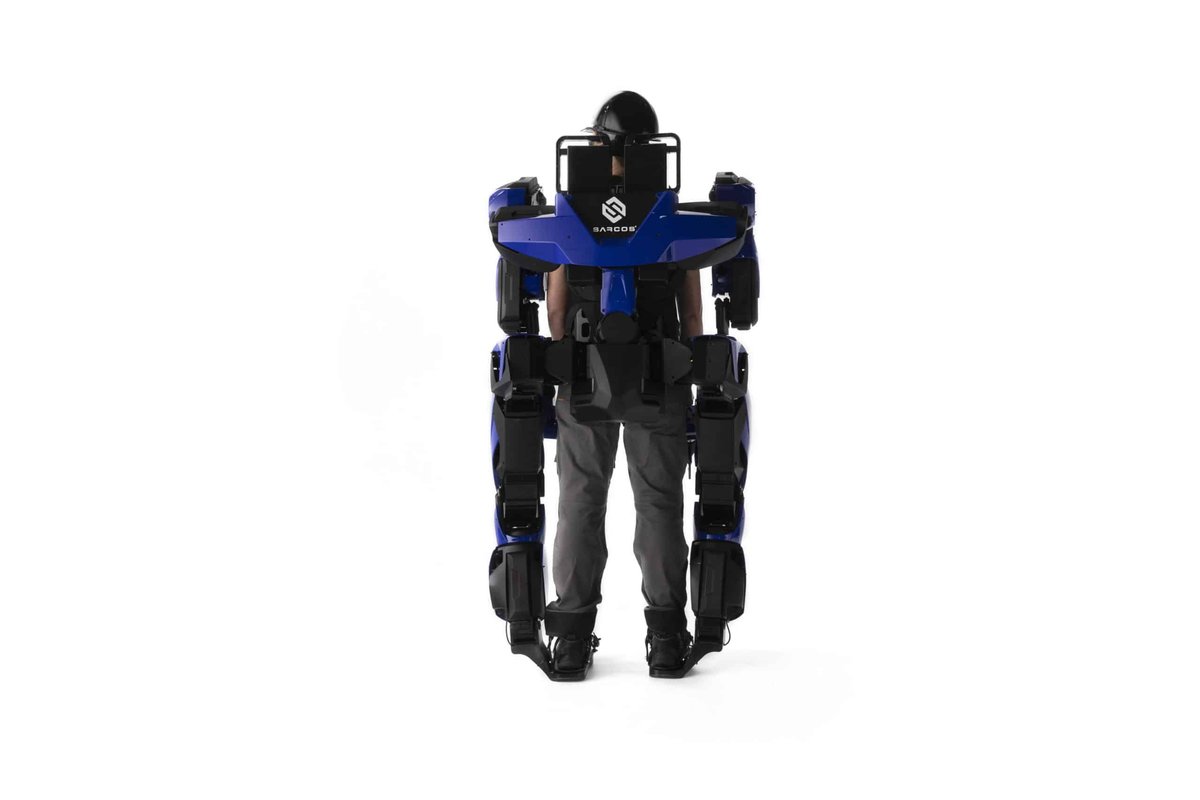
Sarcos Robotics Guardian XO
Guardian XO is an autonomous mobile robot (AMR) from Sarcos Robotics for point-to-point transport and goods-to-person workflows. It maps live environments, avoids people/obstacles and connects to WMS/ERP for mission orchestration and fleet scaling.
View ListingKey benefits
Cut layout and surveying time significantly
Improve on-site safety by removing people from hazards
Reduce rework through consistent precision
Keep projects on schedule despite labour shortages
Key selection criteria
ROI analysis
Average Investment
Price on application per robot
Annual Savings
Price on application per year
Payback Period
18–36 months
Frequently asked questions
What do construction robots cost?
Price on application per robot, saving Price on application a year on the deployments we track. Payback runs 18–36 months.
What can they actually do on site?
Site surveying and mm-accurate layout marking, rebar tying, bricklaying assistance, demolition support, and inspection of structures too hazardous or awkward for people.
Are they rugged enough for a live job site?
Job-site ruggedness and rough-terrain mobility are baseline selection criteria — these machines are built for mud, dust and uneven ground, with jobsite safety certification.
Where's the fastest payback?
Layout and surveying: robots cut layout time dramatically and eliminate rework from marking errors — precision is where the money is.
Can robots help with the trades shortage?
That's the driver for most buyers: keeping projects on schedule despite labour shortages, and pulling people out of the highest-risk tasks.
Where construction robots fit
Explore related areas to find the right robot for your operation.
Ready to automate your site?
Answer a few questions about your site and budget; we'll shortlist robots that fit. About 3 minutes.