
Warehouse & Logistics Robots (AMRs) for UK Operations
Warehouse AMRs and AGVs move goods without a driver. Most UK sites we speak to see payback in 9–18 months. RoboMercato supplies, installs and services them — buy outright, finance, or rent on a monthly plan. Price is quoted for the site, ex VAT.
Buy or rent AMRs for warehouses and factories, installed and serviced in the UK
Last updated 29 September 2026
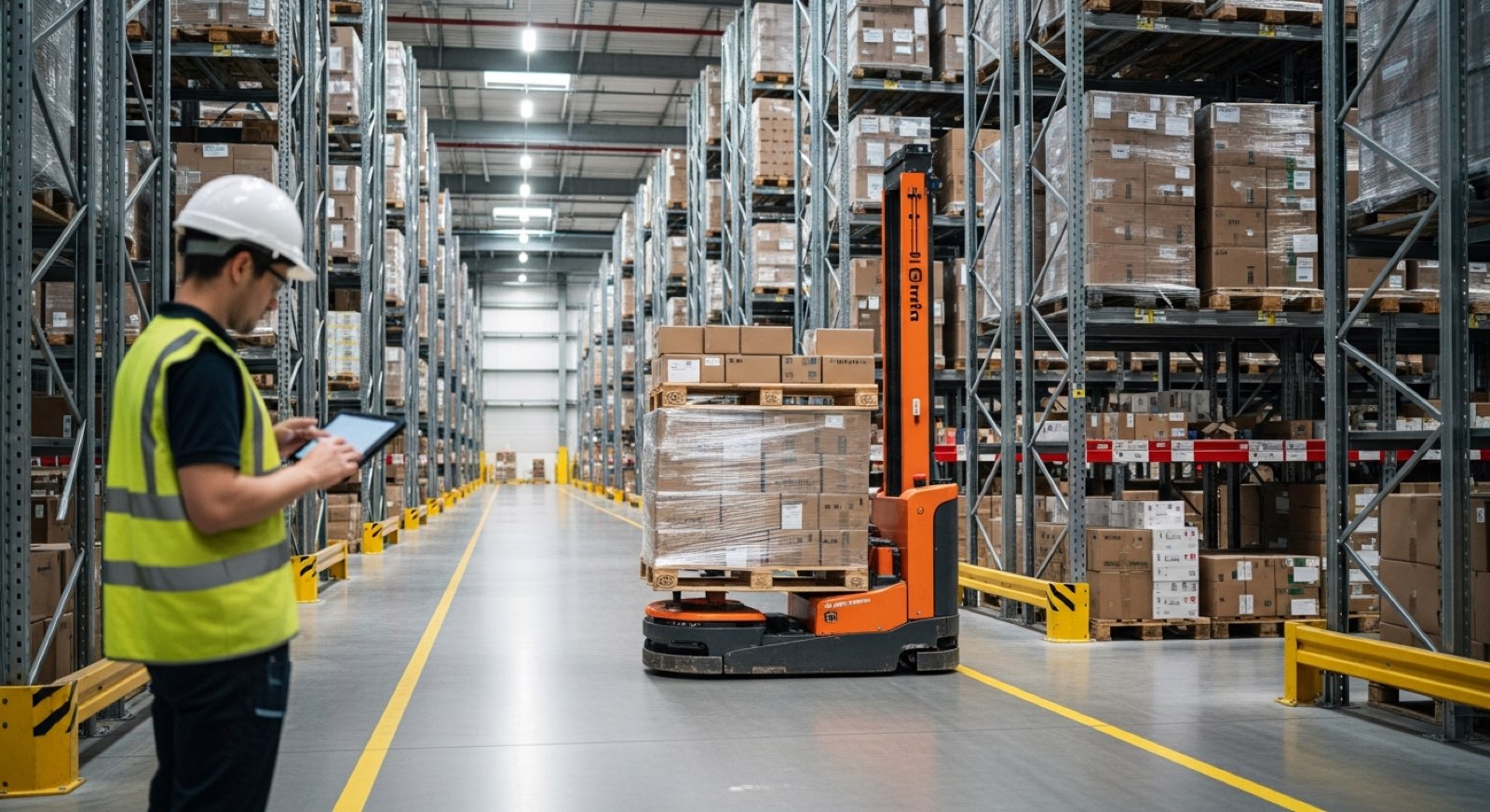
What are warehouse robots and AMRs?
Logistics and material handling robots autonomously transport, pick, and stack materials, products, and equipment within warehouses, distribution centres and factories. Autonomous Mobile Robots (AMRs) navigate dynamically around obstacles, AGVs follow fixed paths, and picking, palletising and tugger systems handle order fulfilment, pallet stacking and internal goods movement.
Best warehouse robots and AMRs in the UK
View all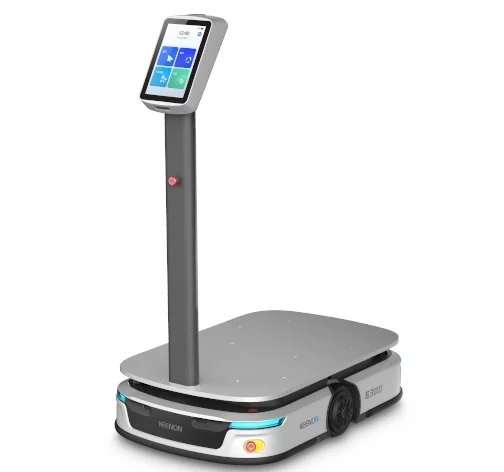
KEENON Robotics S300
The KEENON S300 is a heavy-load industrial delivery robot designed to lift and transport shelves, racks and bulky internal goods up to 300 kg across indoor operational environments. It combines a low 230 mm chassis with an integrated lifting platform, allowing it to move compatible shelves or load carriers in factories, warehouses, logistics spaces and back-of-house operations. The robot supports direct, loop, multi-point and transport workflows, uses LiDAR SLAM, VSLAM and stereo-vision sensing for navigation and obstacle avoidance, and offers automatic charging, manual charging and battery swap options for continuous operation.
View Listing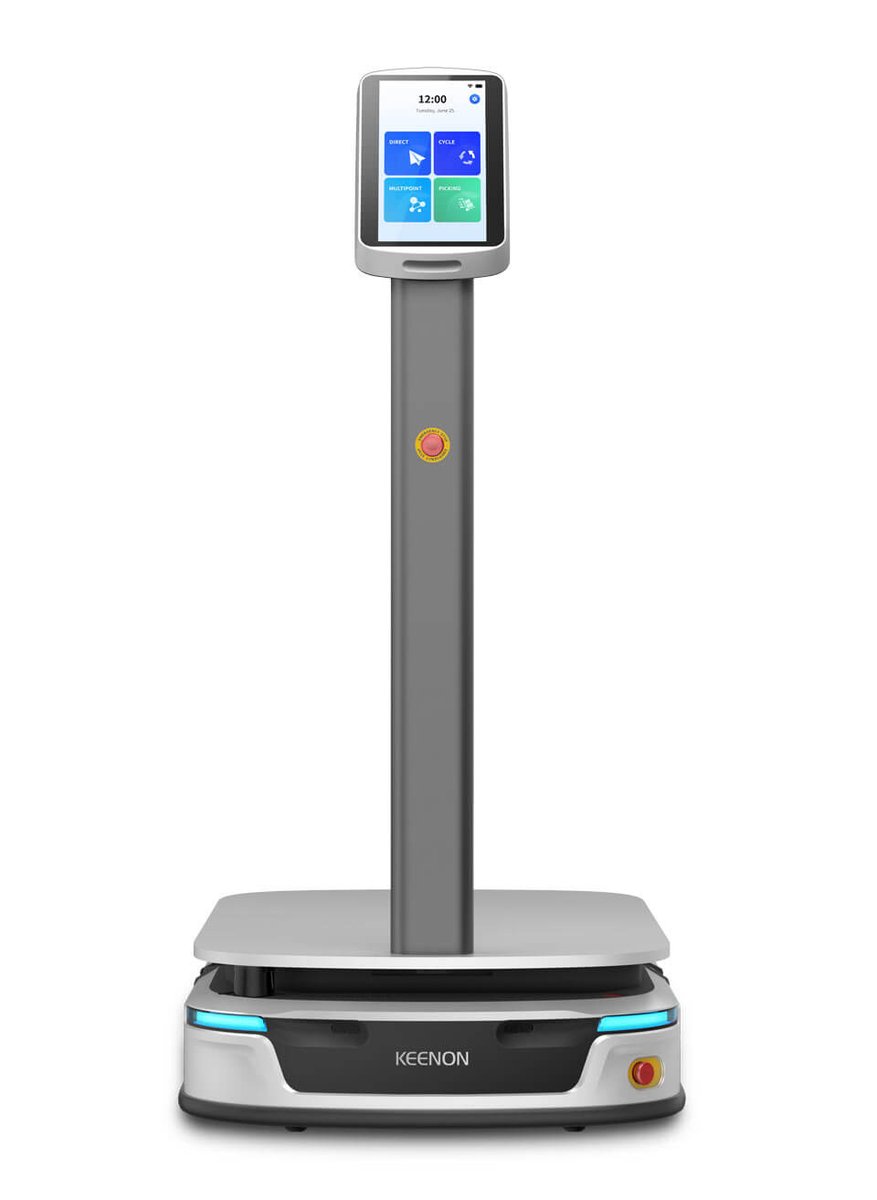
KEENON Robotics S100
The KEENON S100 is an industrial delivery robot designed to move bulky goods and internal loads across indoor workspaces. It offers 100kg+ load capacity on a shelf-based courier platform, helping teams transport supplies, cartons, linens, luggage or inventory with less manual carrying. The robot is positioned for plug-and-play deployment with a pre-installed operating system and app, while its charging pile, adapter charging and fast battery-swap options support continuous material-movement workflows. For buyers, its main value is reducing repetitive internal transport work while improving consistency and safety in shared human-robot environments.
View Listing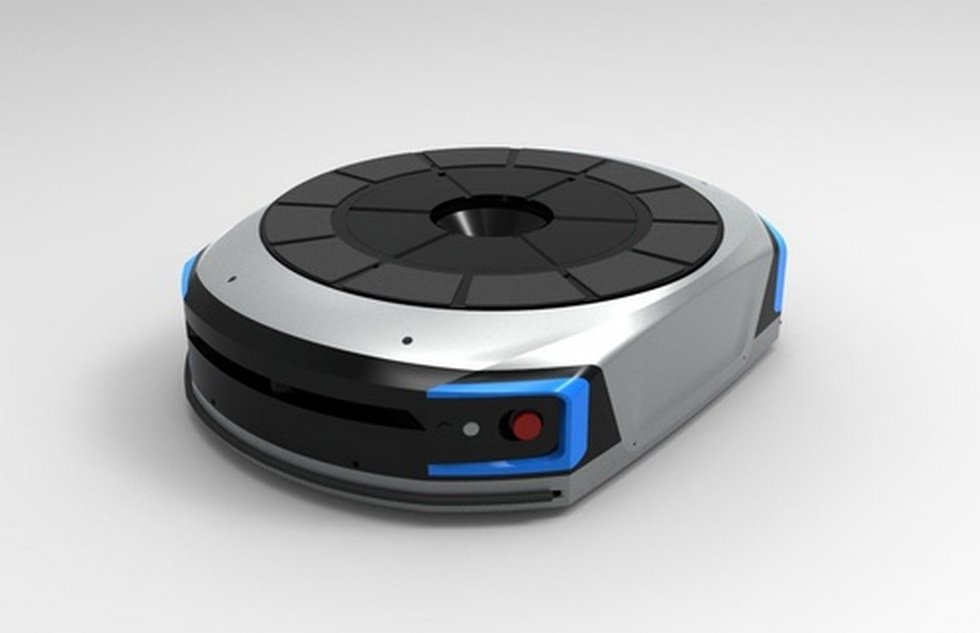
Geek+ P800
Geek+ P-Series robots enable shelf-to-person picking, increasing pick rates and accuracy while minimizing infrastructure changes.
View Listing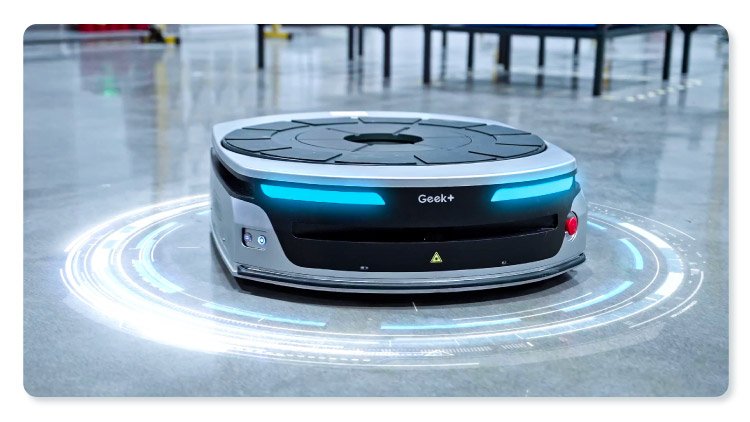
Geek+ P40
Geek+ P-Series robots enable shelf-to-person picking for lighter totes and shelves, with quick layout reconfiguration and scalable fleets.
View Listing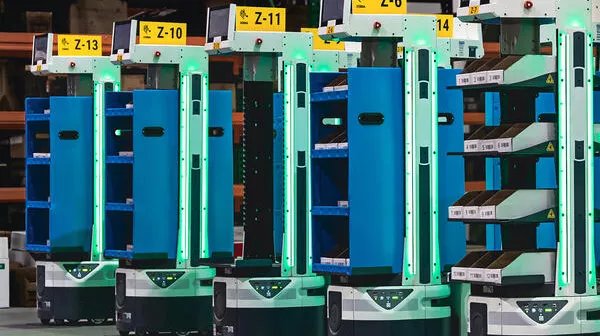
Fetch Robotics (Zebra) Freight500
Freight500 is an AMR for mid-range payloads and pallet movement, designed to deploy in days and scale across sites with Zebra orchestration.
View Listing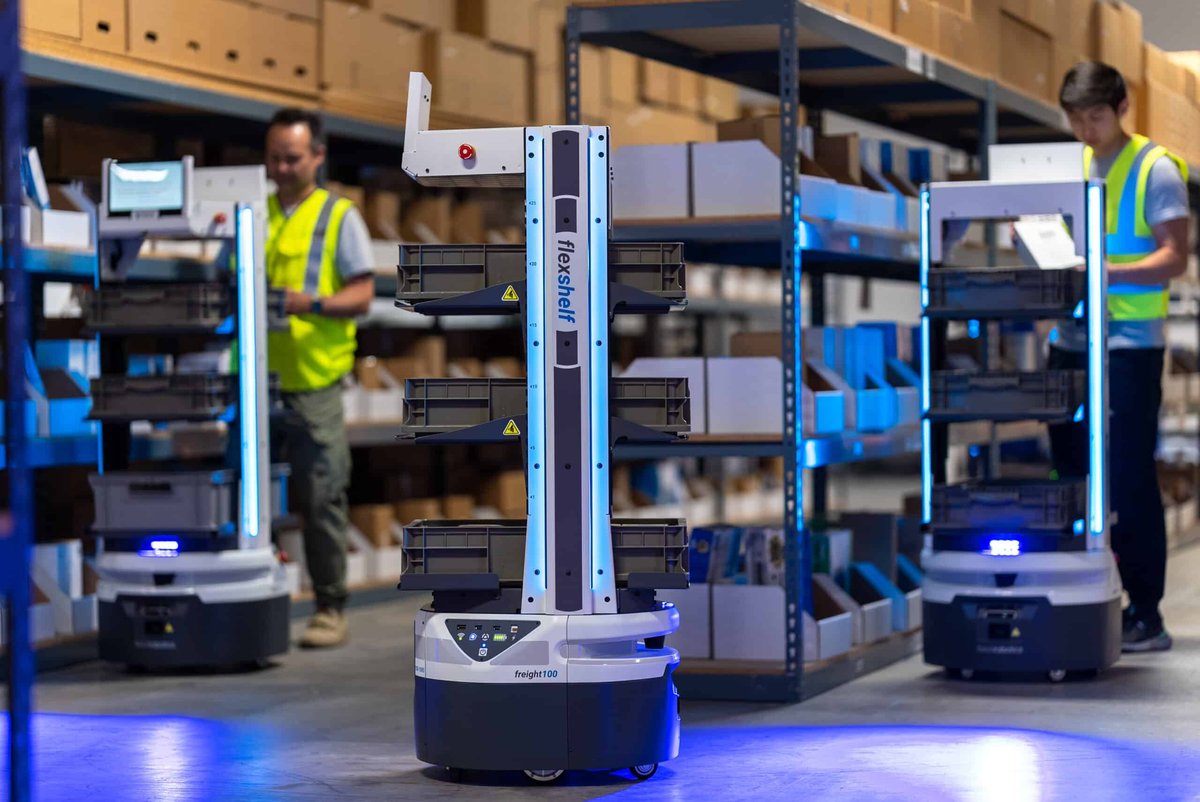
Fetch Robotics (Zebra) Freight100
Freight100 is a compact AMR that autonomously transports bins, totes and small carts between workcells, integrating with Zebra software for workflows.
View Listing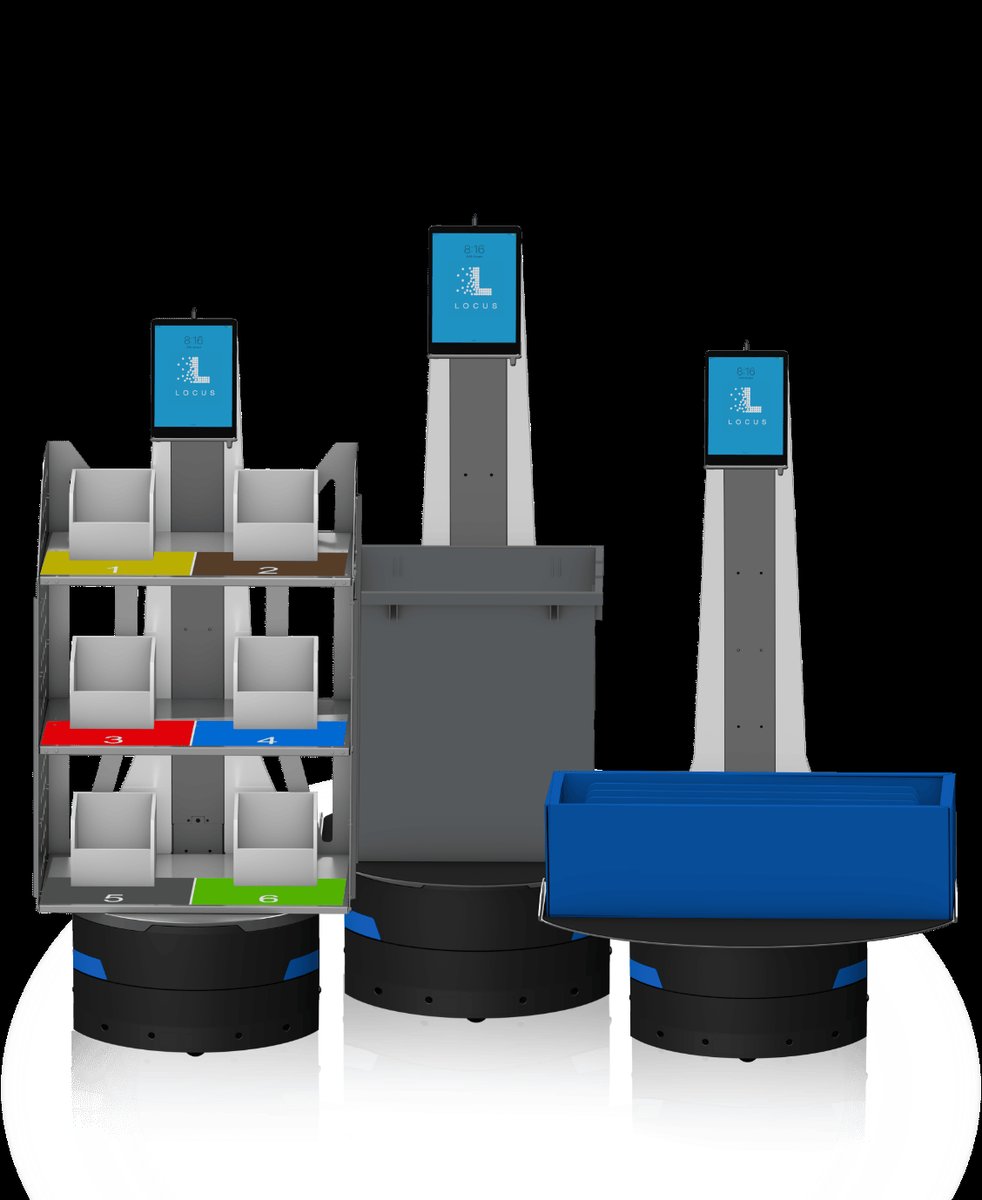
Locus Robotics Locus Origin
Locus Origin is a person-to-goods AMR that guides pickers through optimized routes, boosting throughput without fixed infrastructure changes.
View Listing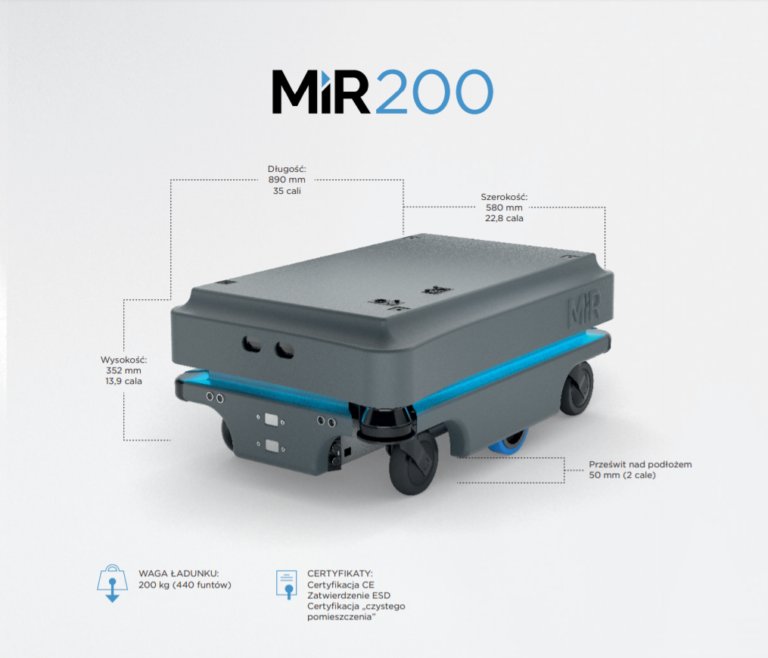
MiR (Mobile Industrial Robots) MiR200
MiR200 is an autonomous mobile robot (AMR) from MiR (Mobile Industrial Robots) for point-to-point transport and goods-to-person workflows. It maps live environments, avoids people/obstacles and connects to WMS/ERP for mission orchestration and fleet scaling.
View Listing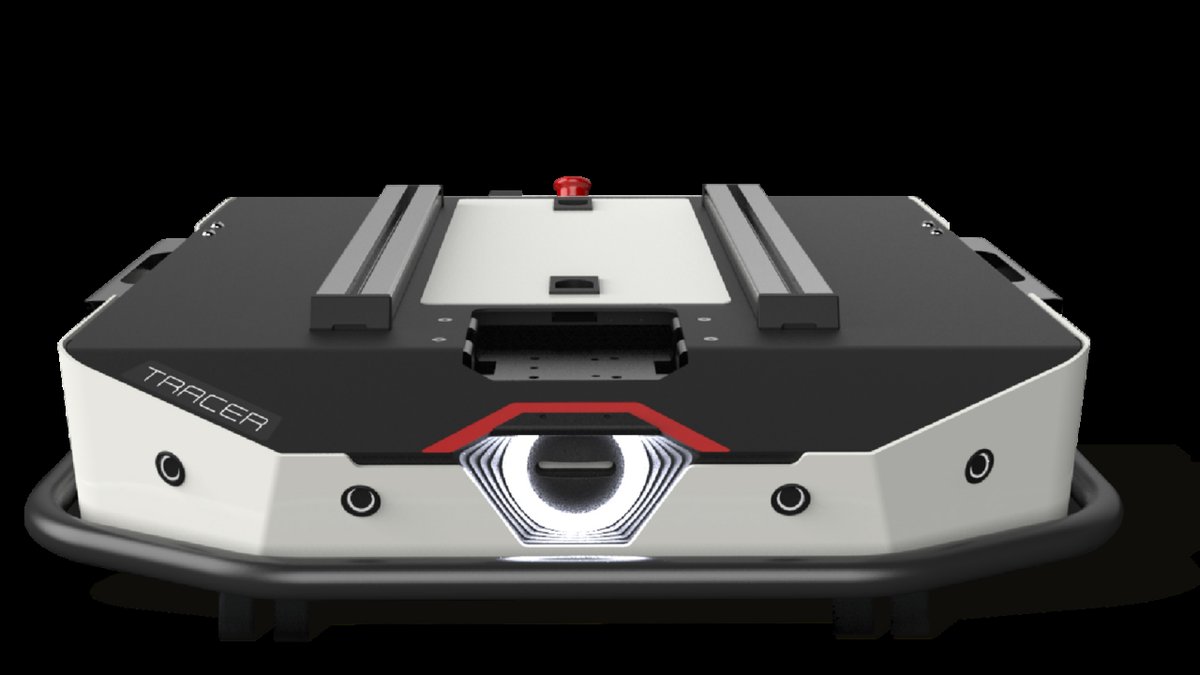
AgileX Robotics Tracer
Tracer is an autonomous mobile robot (AMR) from AgileX Robotics for point-to-point transport and goods-to-person workflows. It maps live environments, avoids people/obstacles and connects to WMS/ERP for mission orchestration and fleet scaling.
View ListingKey benefits
Reduce logistics and material transport time by 50%
Eliminate forklift accidents and manual lifting injuries
Scale warehouse and logistics operations without adding headcount
Optimise warehouse space utilisation
Proven in the field
Real deployments, real results — not projections.
A. Perry
HIKROBOT Q7 AMRs
Challenge: Managing more than 15,000 product lines across 4,000 picking locations, A. Perry faced rising demand, labour shortages and slow fulfilment.
Solution: A goods-to-person system with 15 Q7 AMRs (1,000kg capacity each), 330 mobile racks and two picking stations, live within six weeks.
Result: Picking speed increased 4× and order throughput rose by 60%, with lower day-to-day warehouse operating costs.
Superdry
HIKROBOT AMRs
Challenge: Superdry’s UK warehouse handled ~60,000 SKUs with returns at ~25% of stock movements, all via a fully manual, labour-heavy process.
Solution: 47 mobile robots and 1,000+ (later 1,750) mobile racks were deployed across 12 picking workstations with pick-to-light guidance.
Result: Returns productivity increased 3–3.5× with 99% accuracy, picking staff reduced from 30 to six, and ROI achieved in under two years.
Farsound Aviation
HIKROBOT AMRs
Challenge: While relocating its aerospace supply-chain operation, Farsound needed to improve efficiency, traceability and storage capacity.
Solution: A goods-to-person system with 10 AMRs and 650 mobile racks automated picking, transport and consolidation with digital inventory tracking.
Result: 127% increase in consolidation efficiency and 78% increase in order-fulfilment efficiency, with capacity for ~32,000 additional bins.
Key selection criteria
ROI analysis
Average Investment
Price on application per robot
Annual Savings
Price on application per year
Payback Period
9–18 months
Compare top warehouse robots and AMRs robots
| Robot | Category | Payload | Runtime | Quote |
|---|---|---|---|---|
| Keenon S300 | Warehouse robot | 300 kg | 6 hours | Ask for a quote |
| Keenon S100 | Warehouse robot | 100kg+ | Up to 8 hours | Ask for a quote |
| Geek+ P800 | Warehouse robot | 800 kg | Auto-charging, multi-shift | Ask for a quote |
| Geek+ P40 | Warehouse robot | — | Auto charge for continuous ops | Ask for a quote |
Frequently asked questions
How much does a warehouse logistics and material handling robot cost?
Most AMRs and AGVs we list for logistics and material handling are quoted for the site, ex VAT, and vary per robot depending on payload (anywhere from 1kg to 1,500kg) and navigation type. Racking, fleet software and integration add to that. Across the deployments we track, payback lands in 9–18 months.
What's the difference between an AMR and an AGV?
AGVs follow fixed paths — magnetic tape or QR grids — and suit stable, repetitive routes. AMRs build a map of your site and navigate around people and obstacles, so they handle change better but cost more. Our AMR vs AGV guide covers when each wins.
How long does deployment take?
The goods-to-person system at A. Perry — 15 AMRs, 330 mobile racks, two picking stations — went live in six weeks. Simple point-to-point transport can run within days; full goods-to-person conversions typically take 4–12 weeks including site survey.
Will AMRs integrate with my existing WMS?
Most major logistics fleets connect to common WMS platforms via API. Our vetted integrators handle the middleware — tell us which WMS you run and we'll shortlist compatible fleets.
Are they safe around warehouse staff?
Yes. Logistics AMRs use LiDAR-based obstacle detection and are certified for shared warehouse workspaces. Superdry runs 47 robots alongside pickers across 12 workstations, at 99% picking accuracy.
Can I lease instead of buying outright?
Yes — our finance partners offer leasing and asset finance that turn the capex into monthly opex. The Finance Calculator gives an estimate in a couple of minutes.
Where warehouse robots and AMRs fit
Explore related areas to find the right robot for your operation.
Common industries
Manufacturing
Assembly, welding, machine tending and quality inspection.
Logistics & Warehousing
Picking, palletising, and autonomous transport at scale.
Hospitality
Customer-facing service, delivery, and guest robots.
Healthcare
Hospital logistics, disinfection, and surgical assistance.
Construction
Surveying, structural assembly, and site safety automation.
Transport, Airports & Ports
Baggage handling, cargo, and wayfinding for transport hubs.
Waste Management & Recycling
AI-powered sorting and collection automation.
Compare robots
Ready to automate your warehouse?
Answer a few questions about your site and budget; we'll shortlist robots that fit. About 3 minutes.