
Security & Inspection Robots for UK Sites
Security and inspection robots patrol sites and check equipment around the clock. Typical payback on the systems we track is 12–24 months. RoboMercato supplies, installs and services them for UK sites — buy, finance or rent. Price on application, ex VAT.
Patrol and inspection robots, supplied, installed and serviced
Last updated 29 September 2026
What are security and inspection robots?
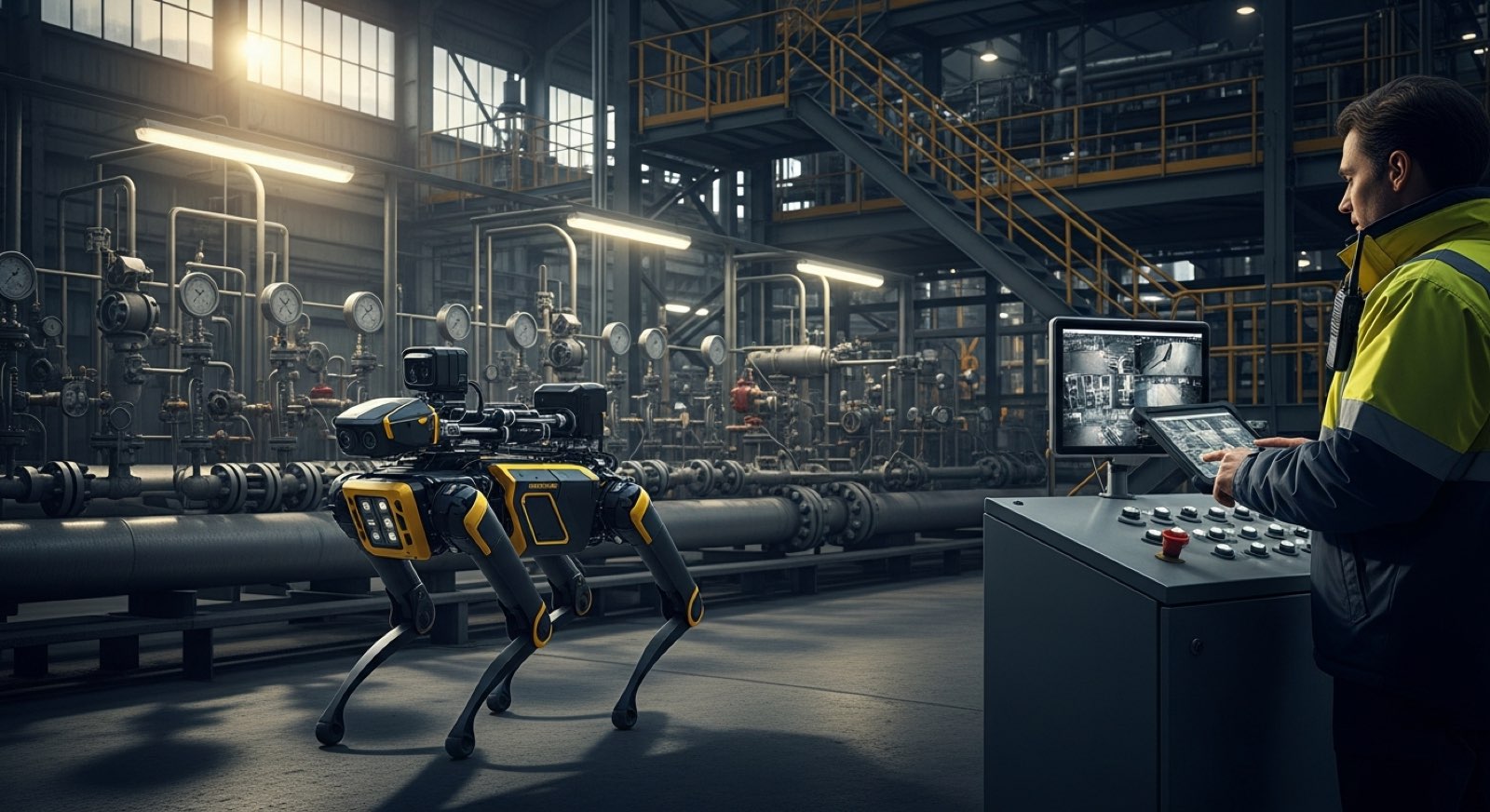
These robots use AI-powered cameras and sensors to inspect products for defects, patrol facilities for security threats, and continuously monitor equipment or infrastructure for anomalies — providing consistent, 24/7 coverage that is difficult to match with human patrols alone.
Best security and inspection robots in the UK
View all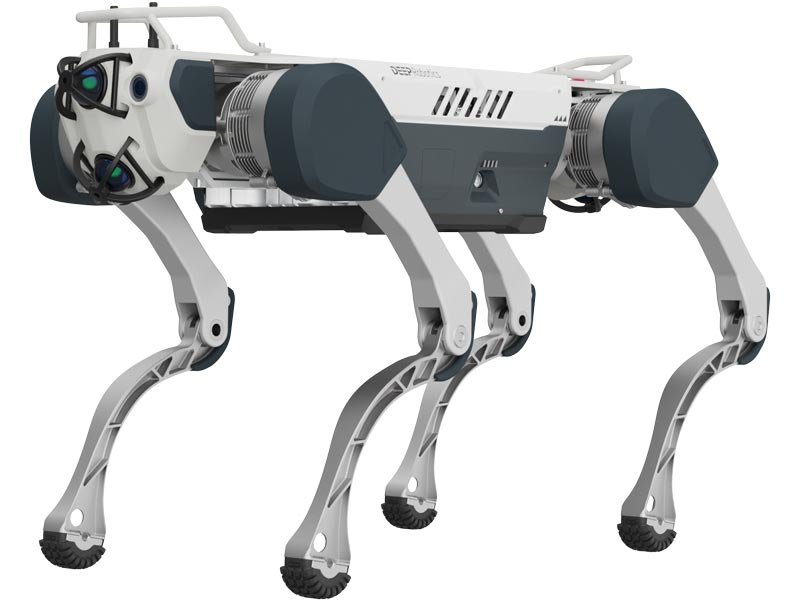
DEEP Robotics X30
The DEEP Robotics X30 is an industrial quadruped robot designed for inspection, reconnaissance, security, surveying and emergency-response work in demanding indoor and outdoor environments. It combines IP67 protection and a -20 to 55 deg C operating range with mobility over 45-degree stairs, open-grate industrial stairways and obstacles of at least 200 mm. Its integrated perception supports autonomous navigation in darkness, strong light, flickering conditions and even without an external light source, while quick battery replacement and autonomous charging support longer inspection workflows. For operators, its main value is reaching complex or hazardous areas, collecting inspection data and reducing repetitive or high-risk manual site access.
View Listing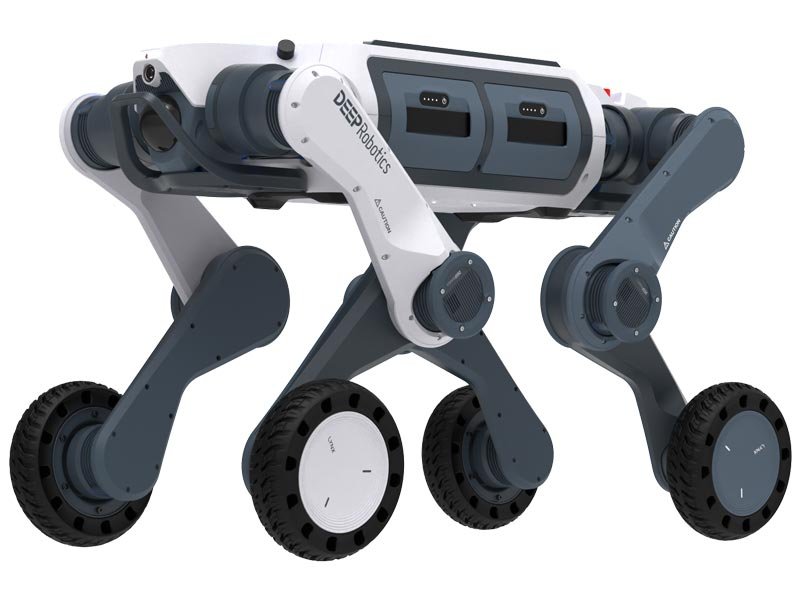
DEEP Robotics LYNX M20
The DEEP Robotics LYNX M20 is an industrial wheel-legged quadruped designed for power inspection, emergency rescue, logistics delivery, scientific exploration and other work across difficult terrain. It combines wheeled speed with legged mobility, carrying a rated 15 kg payload while operating across stairs, steep slopes, mountains, wetlands, rubble and narrow passages. The current official specification adds dual 96-line LiDAR, wide-angle cameras, autonomous navigation, omnidirectional obstacle avoidance, IP66 protection, hot-swappable batteries and optional autonomous charging. For operators, its main value is covering larger and harder-to-access sites while reducing repeated human entry into hazardous or physically demanding environments.
View Listing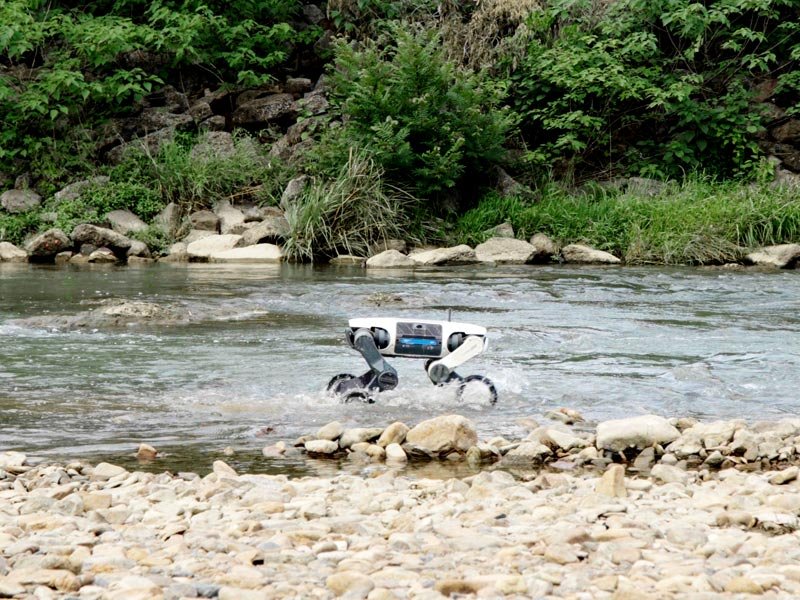
DEEP Robotics LYNX S10
The DEEP Robotics LYNX S10 is a compact wheeled-legged quadruped designed for lightweight professional tasks in narrow, rugged and weather-exposed environments. Weighing no more than 20 kg including its battery, it is intended for rapid one-person deployment and can move through narrow passages and rubble gaps while reaching a stated flat-ground speed of 8 m/s and crossing obstacles up to 500 mm high. Its omnidirectional perception, autonomous mapping, localisation, path planning and intelligent obstacle avoidance support assigned inspection or patrol tasks with reduced operator intervention. IP66 protection and operation from -20 to 55 deg C make it relevant to power inspection, security patrol, emergency response and education or research workflows, subject to site, safety and payload validation.
View Listing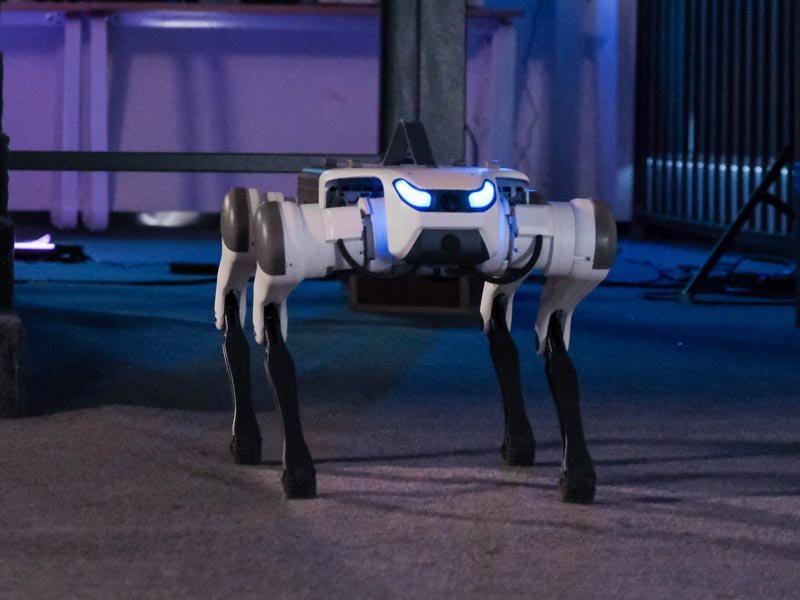
DEEP Robotics Lite3
The DEEP Robotics Lite3 is a compact quadruped platform designed primarily for education, robotics research and secondary development. The series is offered in Basic, Venture, Pro and LIDAR configurations, progressing from visual following and obstacle-stop functions to richer expansion interfaces, forward obstacle avoidance and autonomous navigation. Across the range it combines 40-degree slope capability, 18 cm stair or obstacle traversal, 1.5-2 hours of stated motion endurance and official SDK, API, ROS and reinforcement-learning resources. Its main buyer value is a comparatively accessible, portable development platform for locomotion, perception, embodied AI, human-robot interaction and demonstration work rather than a weather-rated industrial inspection robot.
View Listing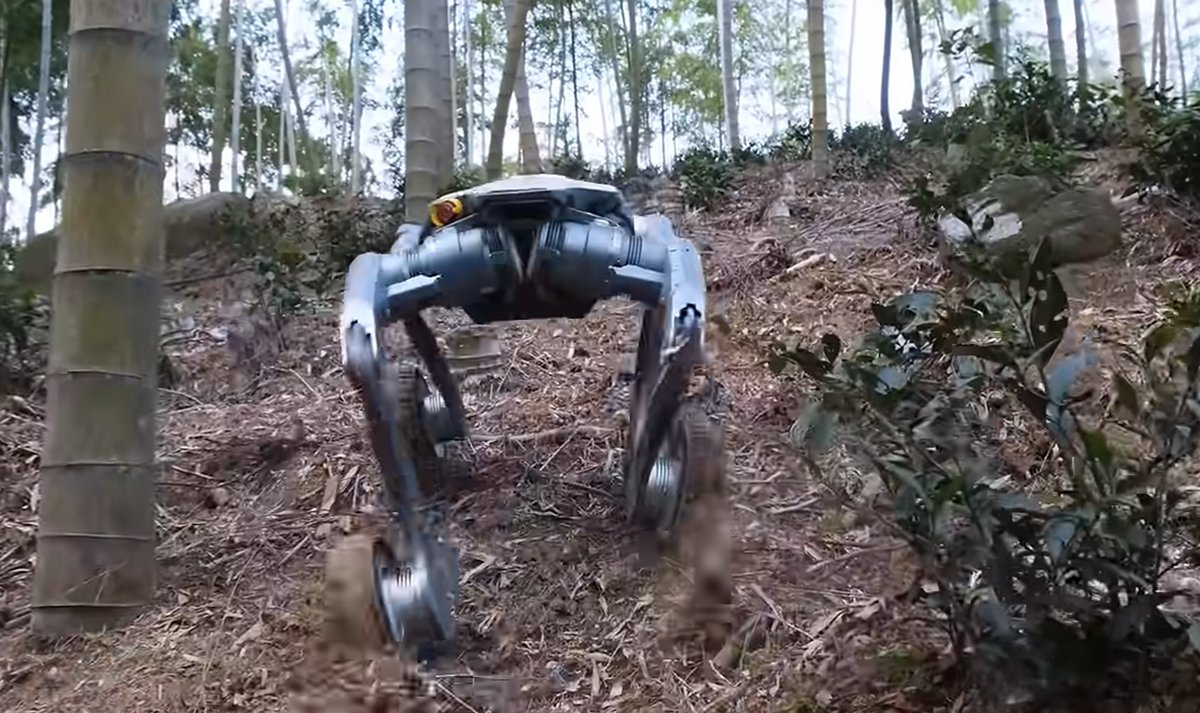
DEEP Robotics DEEPRoboticsLynx
DEEPRoboticsLynx is a compact wheel-legged all-terrain quadruped designed to combine the speed and range of wheels with the obstacle access and posture control of articulated legs. It carries up to 12 kg, reaches 5 m/s, runs for up to 3 hours or 15 km, and can negotiate continuous 22 cm steps and platforms up to 80 cm. Its official configuration includes dual hot-swappable batteries, a 1080p wide-angle camera, Wi-Fi image transmission, GPS, app and handheld-remote support, IP54 protection and operation from -10 to 40 deg C. For buyers, its main value is fast mixed-terrain mobility for payload transport, remote field observation, exploration and access to routes that are inefficient for conventional AMRs or foot-only quadrupeds.
View Listing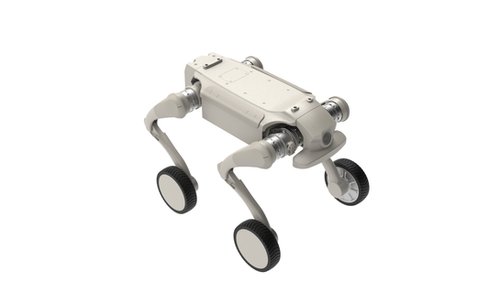
AGIBOT D1 Ultra-W IP54
The AGIBOT D1 Ultra-W IP54 is a compact wheeled-legged quadruped platform for inspection, security, emergency-response support, research and custom payload development. AGIBOT's official Ultra-W development guide specifies a 22 kg body, 16 total degrees of freedom (four per leg), a 5 kg rated payload, 3.7 m/s maximum speed, 1-2 hours of runtime and 9 km range. Its hybrid mobility envelope includes continuous stair climbing up to 16 cm, a 35 cm jump, maximum climbing height of 60 cm, and 30° standard or 40° extreme-condition slope capability. The 43.2 V, 4.6 Ah battery charges in about one hour. IP54 protection and a 0°C to 40°C operating range support mixed indoor and sheltered outdoor work. A 1080p wide-field camera, standard IMU, Wi-Fi 5.0, Bluetooth 5.0, Gigabit Ethernet, USB, power, SBUS and UART interfaces, real-time video and an official high-level SDK support teleoperation and secondary development. Packaged autonomous navigation, obstacle avoidance, fleet management and autonomous charging are not published as standard functions.
View Listing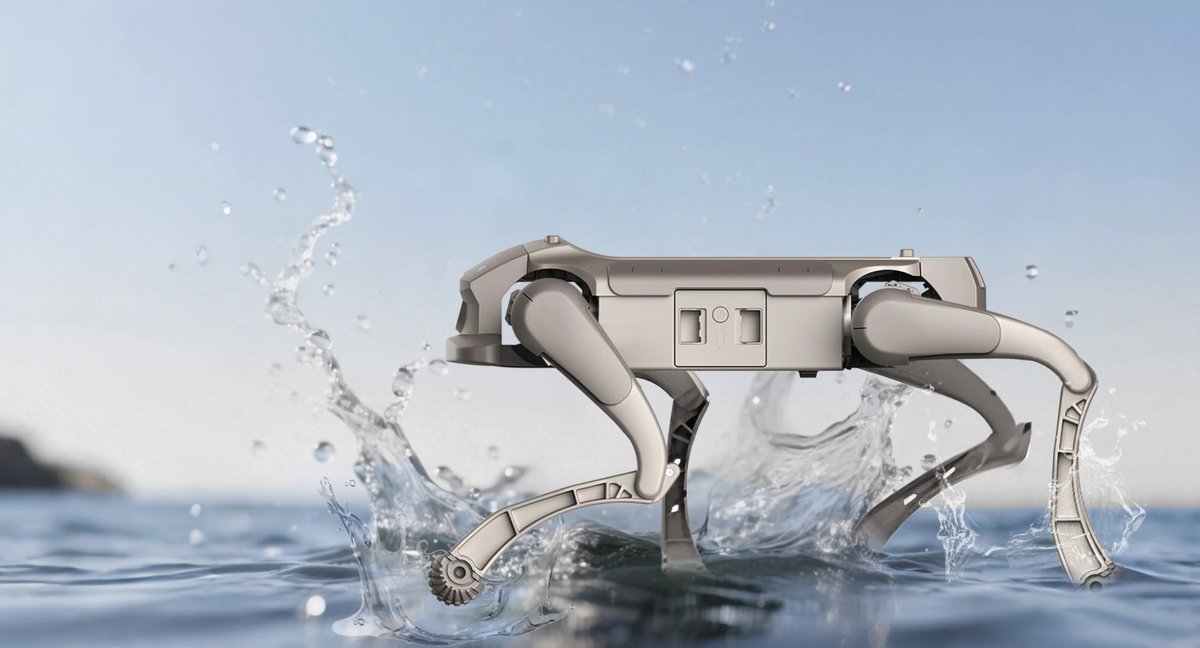
AGIBOT D1 Ultra IP54
The AGIBOT D1 Ultra IP54 is a compact industrial quadruped designed for security, inspection, emergency-response support, research and custom payload applications. It weighs 15.5 kg, carries a rated 5 kg payload, reaches 3.7 m/s and provides 1-2 hours of runtime with a published range of 6 ± 1 km. Reinforcement-learning gait control supports self-balancing, anti-tipping and disturbance rejection, with continuous stair climbing up to 16 cm, jumps up to 35 cm, and slopes rated at 30° in standard conditions or 40° in extreme conditions. IP54 protection, sealed and anti-corrosion core components, and operation from 0°C to 40°C support deployment around dust, splashes, damp, mud and sand. A 12-DoF platform, 8-core CPU, 1080p wide-field camera, IMU, M4 payload mounting, Gigabit Ethernet, USB, power, SBUS and UART interfaces, and an open high-/low-level SDK provide a strong base for integrator-developed sensing, teleoperation and autonomy. Intelligent following, mapping, patrol and autonomous navigation require secondary development and optional sensors.
View Listing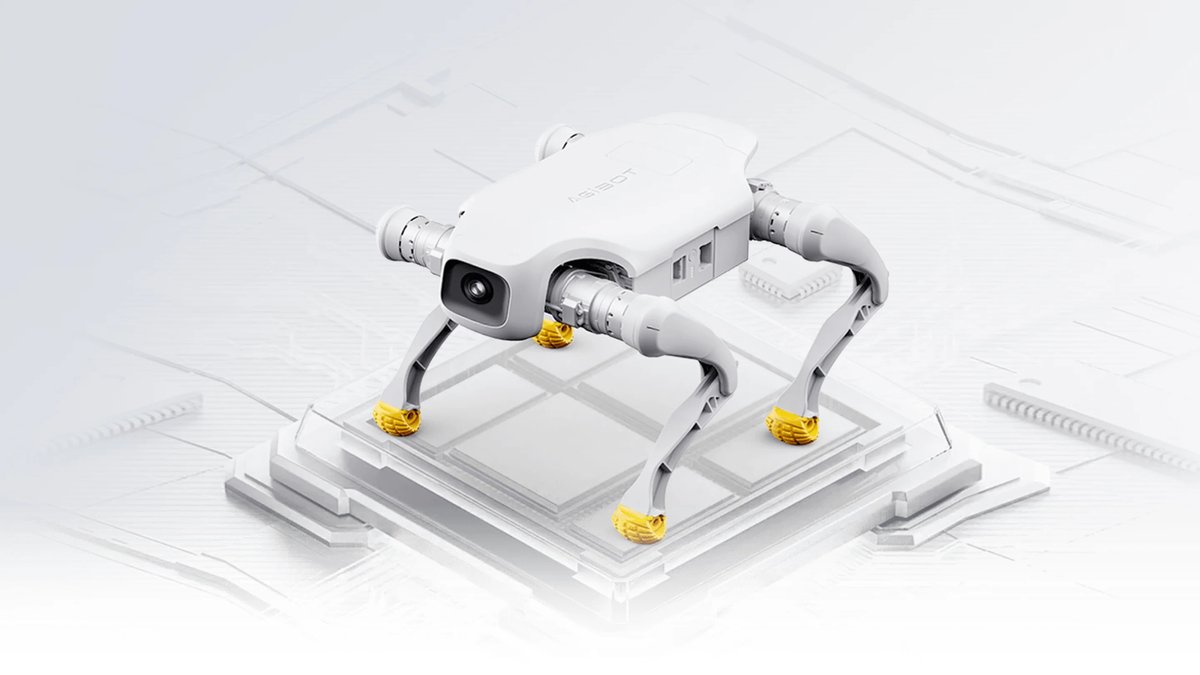
AGIBOT D1 Pro
The AGIBOT D1 Pro is a compact, remotely operated quadruped designed for agile demonstrations, light-item carriage, education and remotely supervised inspection or security experiments. It weighs 15.5 kg, carries a 5 kg effective payload, reaches 3.5 m/s and operates for approximately 1-2 hours, with reinforcement-learning-based gait control, 16 cm continuous stair climbing and a 35 cm vertical jump. The supplied joystick controller and real-time image transmission support straightforward teleoperation, while the 48 N·m joints, self-balancing and anti-fall behaviours support dynamic movement across varied ground surfaces. Unlike the D1 Edu, the Pro version does not support an SDK or functional expansion ports, so buyers should treat it as an out-of-the-box remote platform rather than a secondary-development robot.
View Listing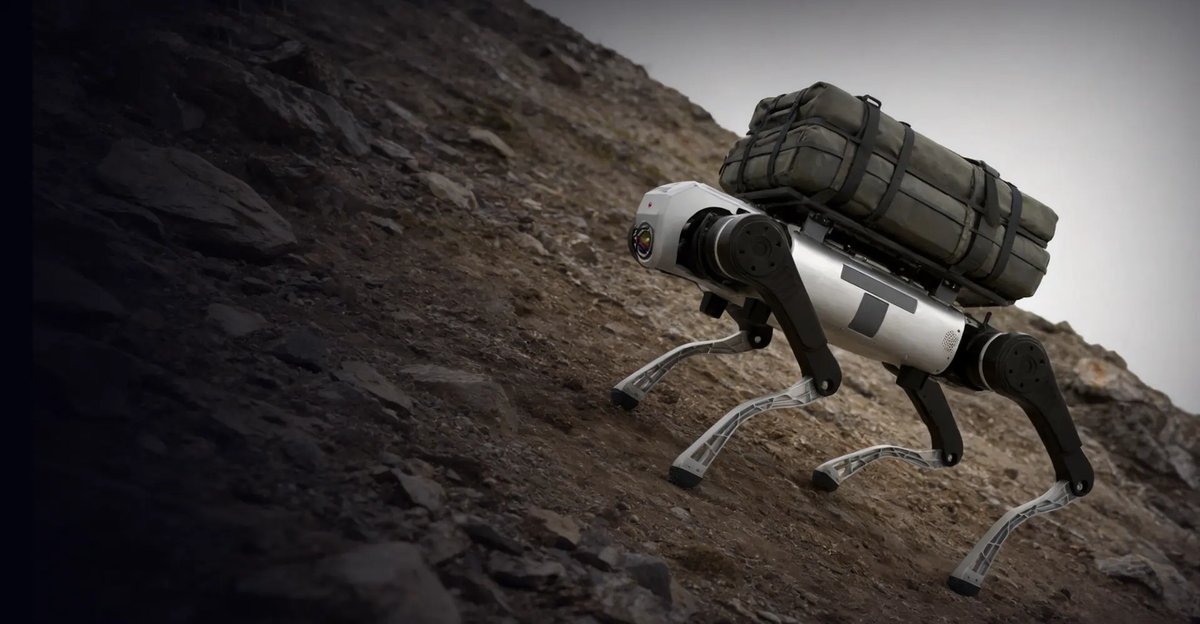
AGIBOT D1 MaxPro IP67
The AGIBOT D1 MaxPro IP67 is a heavy-duty industrial quadruped designed for sustained payload transport, material handling, emergency-response support and custom remote or autonomous operations. It carries a rated 50 kg payload while weighing 68 kg, uses a 2,081 Wh battery, and delivers 5.5 ± 0.5 hours unloaded or at least 2 hours under a 50 kg load, with a published operational range of 21 ± 1 km unloaded and 11 ± 1 km at full load. The platform climbs continuous stairs up to 30 cm, including open-riser industrial stairs, supports self-righting after a fall, and is rated for 45-degree slopes. IP67 protection, operation from -20°C to 55°C and published operation in water up to 20 cm deep support harsh-site deployment. A 117 TOPS GPU compute module, front 96-channel LiDAR, front and rear wide-angle cameras, automotive-grade IMU, TCP/ROS SDK and extensive power/data interfaces provide an industrial base for integrator-developed payloads and autonomy.
View ListingKey benefits
Detect defects and threats humans miss
Provide 24/7 consistent coverage
Generate auditable inspection and patrol data automatically
Reduce risk exposure for security and inspection staff
Proven in the field
Real deployments, real results — not projections.
Certis Industrial Park
DEEP Jueying X30
Challenge: Certis needed reliable 24/7 monitoring across a complex industrial park with patrol gaps caused by stairs and uneven terrain.
Solution: A DEEP Jueying X30 quadruped patrolled autonomously, detecting people, vehicles and unusual objects and streaming live alerts.
Result: 30% faster incident response with wider, more consistent patrol coverage and fewer terrain-related blind spots.
Large Warehouse Park
DEEP Jueying X30 + Lynx M20
Challenge: High overnight security costs, long complex patrol routes and blind spots in narrow aisles across a large warehouse park.
Solution: X30 and Lynx M20 quadrupeds patrolled autonomously using LiDAR, vision, thermal imaging and gas sensors to detect hazards.
Result: One robot performed the patrol workload of around three security employees, cutting labour costs by 66% with 95% hazard-detection accuracy.
Zhejiang Power Utility
DEEP Jueying X30
Challenge: Manual substation inspections took over an hour per round, were labour-intensive and exposed staff to harsh weather and safety risks.
Solution: A DEEP Jueying X30 was equipped with HD cameras, thermal imaging and LiDAR, integrated with existing SCADA systems for automated reporting.
Result: Cut operating costs by ~70%, reaching 98% inspection accuracy with full rounds completed in under 35 minutes versus over an hour manually.
Key selection criteria
ROI analysis
Average Investment
Price on application per system
Annual Savings
Price on application per year
Payback Period
12–24 months
Compare top security and inspection robots
| Robot | Category | Payload | Runtime | Quote |
|---|---|---|---|---|
| DEEP Robotics X30 | Inspection & security | >=20 | 2.5-4; official mileage >=10 km hours | Ask for a quote |
| DEEP Robotics Lynx M20 | Inspection & security | 15 kg | 3 unloaded; 2.5 loaded at 15 kg hours | Ask for a quote |
| DEEP Robotics LYNX S10 | Inspection & security | (TBC) | (TBC) hours | Ask for a quote |
| DEEP Robotics Lite3 | Inspection & security | 2.5-5 continuous walking load by variant; newer official brochure separately claims up to 7.5 maximum | 1.5-2 hours | Ask for a quote |
Frequently asked questions
What does an inspection or patrol robot cost?
Price on application per system, saving Price on application a year in the deployments we track. Payback is typically 12–24 months.
How does a patrol robot compare with hiring guards?
In a North American warehouse park, one quadruped covered the patrol workload of roughly three security employees, cutting patrol labour costs 66%. Most sites use robots for repetitive routes and keep people for response and judgment calls.
How accurate is robot inspection?
The deployments on this page run at 95–98% detection accuracy. Zhejiang Power Utility's substation robot completes rounds in under 35 minutes (versus over an hour manually) at 98% inspection accuracy.
Can they handle stairs, kerbs and outdoor terrain?
Quadruped platforms can — that’s their advantage over wheeled patrols. Certis chose a quadruped specifically because stairs and uneven terrain created patrol gaps.
Will it integrate with our security operations centre or SCADA?
Yes — SOC and MES/ERP integration is a standard selection criterion, and Zhejiang's robot reports directly into existing SCADA for automated reporting.
What data do we get?
Auditable, time-stamped patrol and inspection logs, live video, thermal imagery and sensor readings (gas, anomaly detection) — evidence-grade records generated automatically.
Where security and inspection robots fit
Explore related areas to find the right robot for your operation.
Common industries
Manufacturing
Assembly, welding, machine tending and quality inspection.
Retail
Shelf-scanning and in-store inventory automation.
Healthcare
Hospital logistics, disinfection, and surgical assistance.
Commercial Real Estate & Facilities
Cleaning, security patrol, and concierge for managed buildings.
Security
Autonomous patrol, surveillance, and access monitoring.
Energy, Utilities & Industrial Sites
Inspection of pipelines, substations, and solar farms.
Construction
Surveying, structural assembly, and site safety automation.
Agriculture
Field robotics for planting, harvesting, and inspection.
Public Sector & Government
Public safety, infrastructure inspection, and municipal services.
Transport, Airports & Ports
Baggage handling, cargo, and wayfinding for transport hubs.
Compare robots
Ready to automate your security patrols?
Answer a few questions about your site and budget; we'll shortlist robots that fit. About 3 minutes.