
Manufacturing Automation Robots
Automate Machine Tending, Welding & Production Line Tasks
Last updated 29 September 2026
What are manufacturing robots?
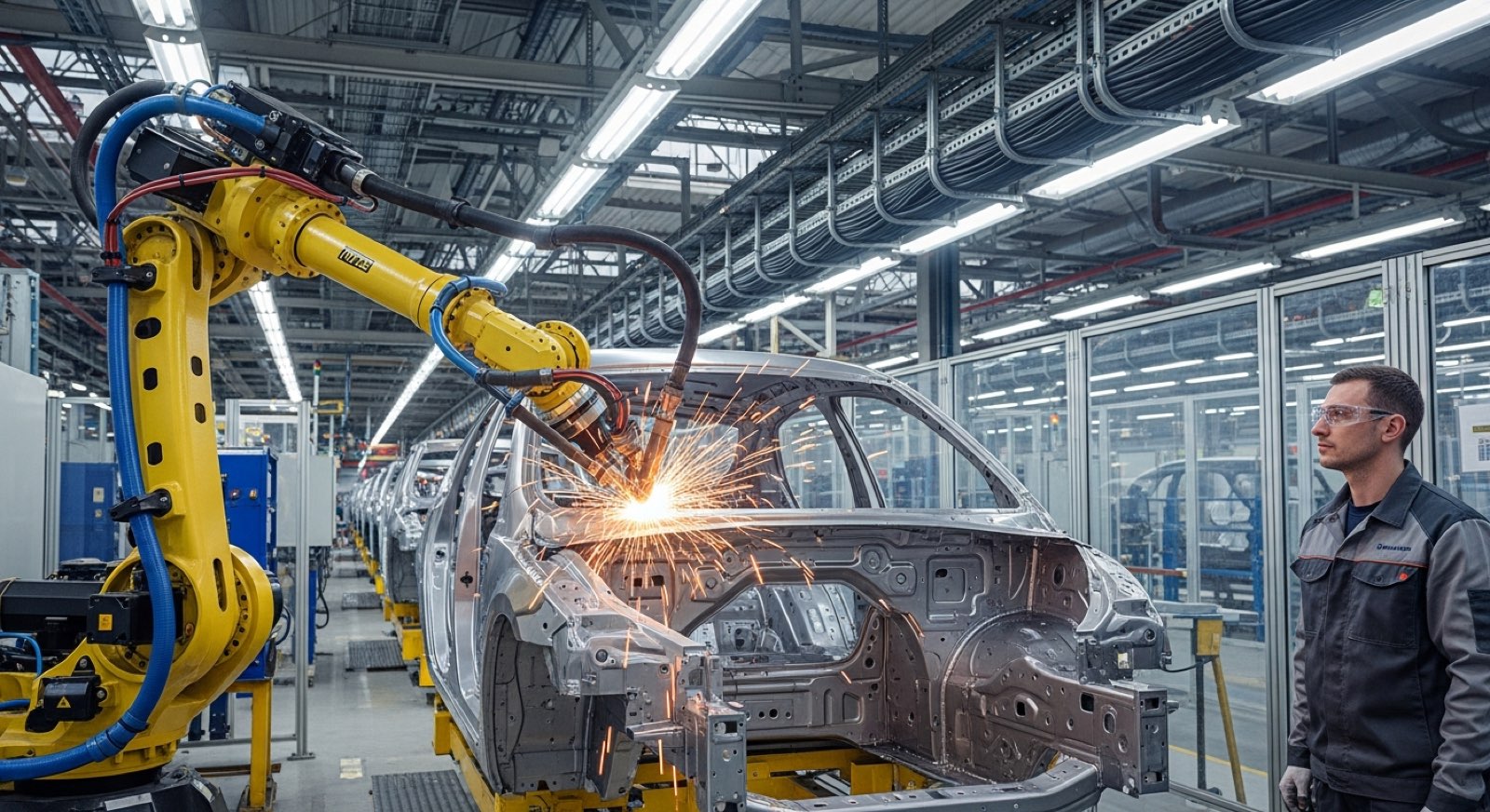
Manufacturing automation robots handle repetitive, physically demanding production tasks — loading and unloading CNC machines and presses, performing MIG/TIG/spot welding, and tending injection-moulding or stamping equipment — so factories can run lights-out shifts with consistent quality.
Best manufacturing robots in the UK
View all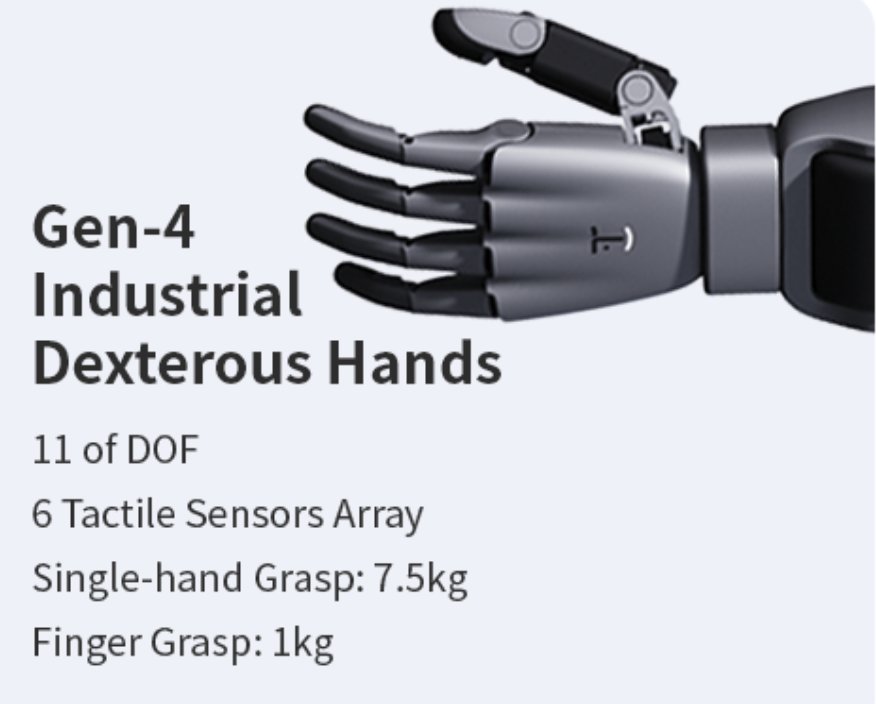
UBTECH Robotics Walker
The UBTECH Walker S2 is an industrial-grade bipedal humanoid robot designed for smart manufacturing and logistics. It leverages a proprietary AI large model, advanced bipedal locomotion, and dexterous manipulation to autonomously perform complex tasks like assembly, quality inspection, and material handling, enhancing efficiency and flexibility on the factory floor.
View Listing
UBTECH Robotics Walker S2
The UBTECH Robotics Walker S2 Standard is an industrial-grade bipedal humanoid robot engineered for smart factory environments. It combines advanced locomotion, dexterous manipulation, and AI-powered perception to automate complex tasks like quality inspection, material handling, and assembly line operations, enabling flexible and intelligent manufacturing.
View Listing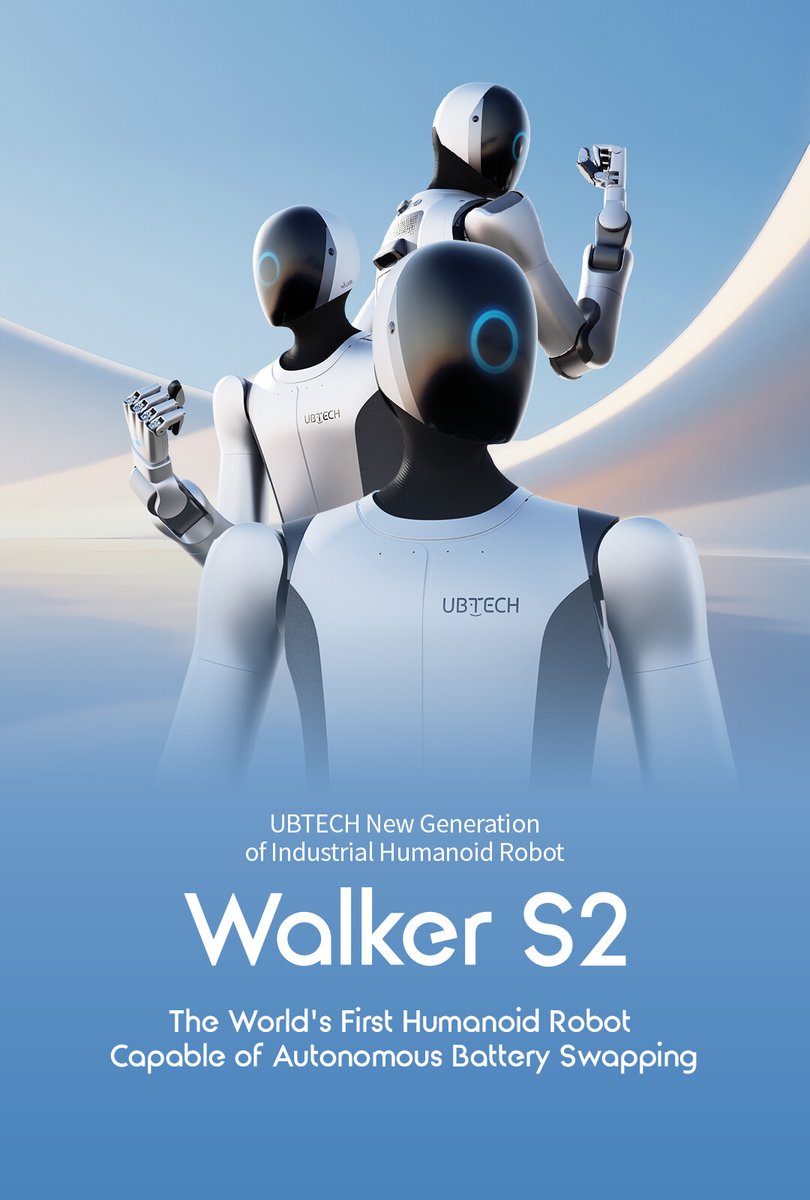
UBTECH Robotics Walker X
Walker X is a service humanoid designed for hospitality, offices and smart-home scenarios, combining smooth bipedal walking with expressive HRI and object handling.
View Listing
1X Technologies NEO
NEO is a bipedal humanoid platform under active development focused on everyday assistance and commercial service work with supervised autonomy.
View Listing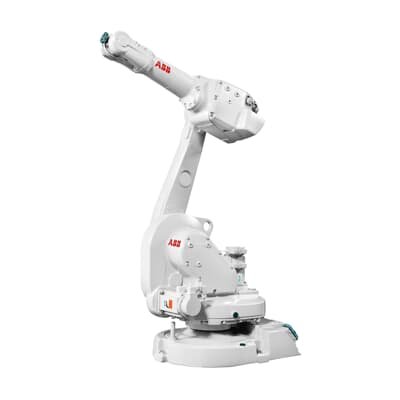
ABB Robotics IRB 1600
IRB 1600 is a fast, precise industrial arm for machine tending and material handling, chosen for long-running production cells.
View Listing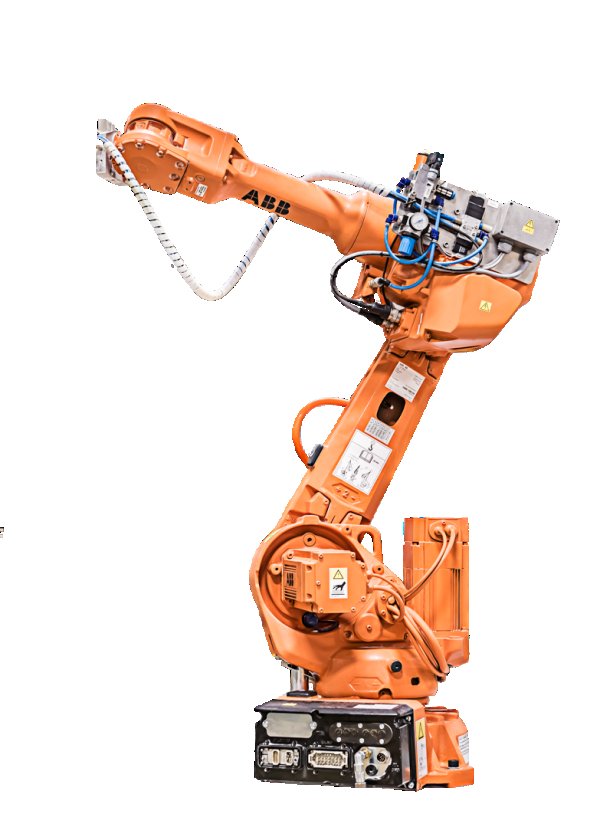
ABB Robotics IRB 2600
IRB 2600 is a compact, high-speed arm with excellent reach-to-payload ratio for arc welding, tending and handling in tight cells.
View Listing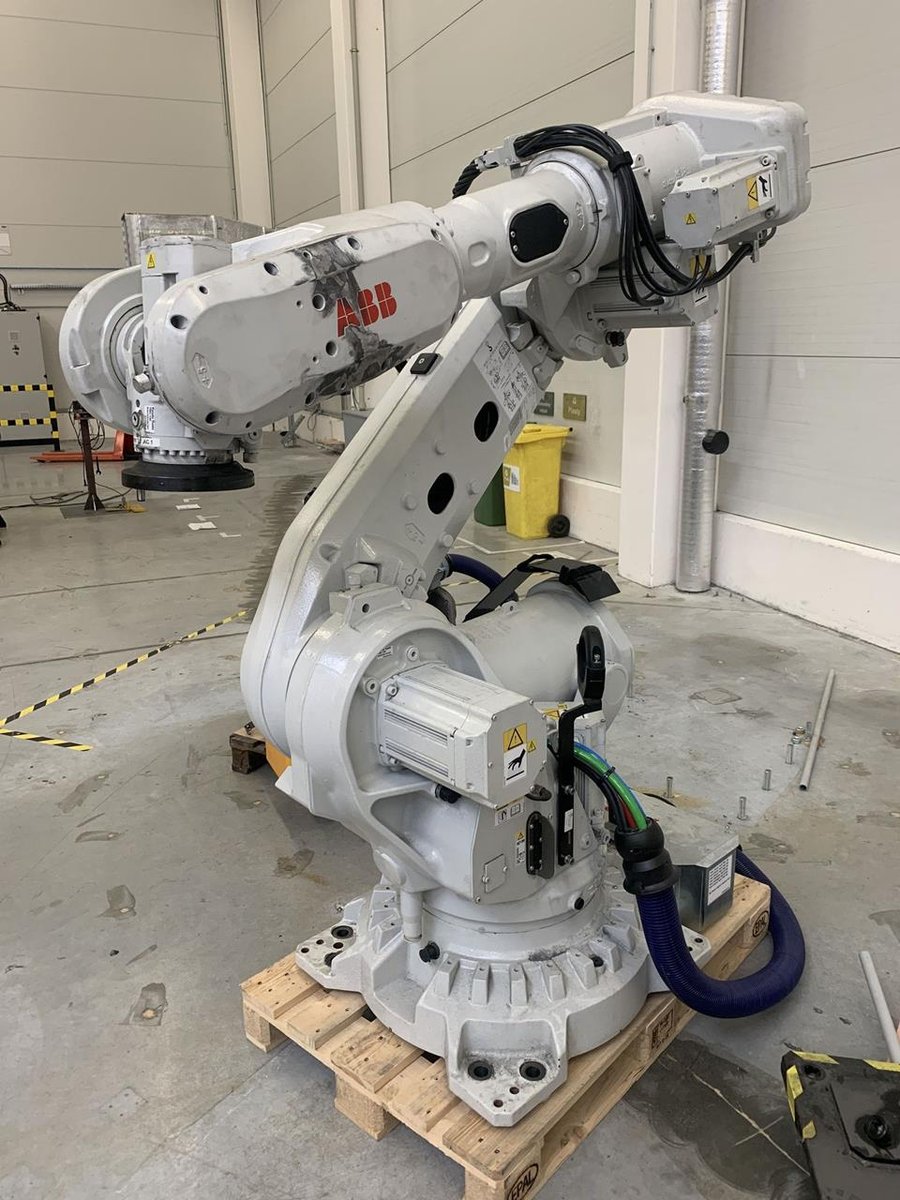
ABB Robotics IRB 6700
IRB 6700 is a high-payload workhorse for heavy handling, spot welding and press tending, built for harsh environments with Foundry options.
View Listing
AGIBOT D1 MaxPro IP67
The AGIBOT D1 MaxPro IP67 is a heavy-duty industrial quadruped designed for sustained payload transport, material handling, emergency-response support and custom remote or autonomous operations. It carries a rated 50 kg payload while weighing 68 kg, uses a 2,081 Wh battery, and delivers 5.5 ± 0.5 hours unloaded or at least 2 hours under a 50 kg load, with a published operational range of 21 ± 1 km unloaded and 11 ± 1 km at full load. The platform climbs continuous stairs up to 30 cm, including open-riser industrial stairs, supports self-righting after a fall, and is rated for 45-degree slopes. IP67 protection, operation from -20°C to 55°C and published operation in water up to 20 cm deep support harsh-site deployment. A 117 TOPS GPU compute module, front 96-channel LiDAR, front and rear wide-angle cameras, automotive-grade IMU, TCP/ROS SDK and extensive power/data interfaces provide an industrial base for integrator-developed payloads and autonomy.
View Listing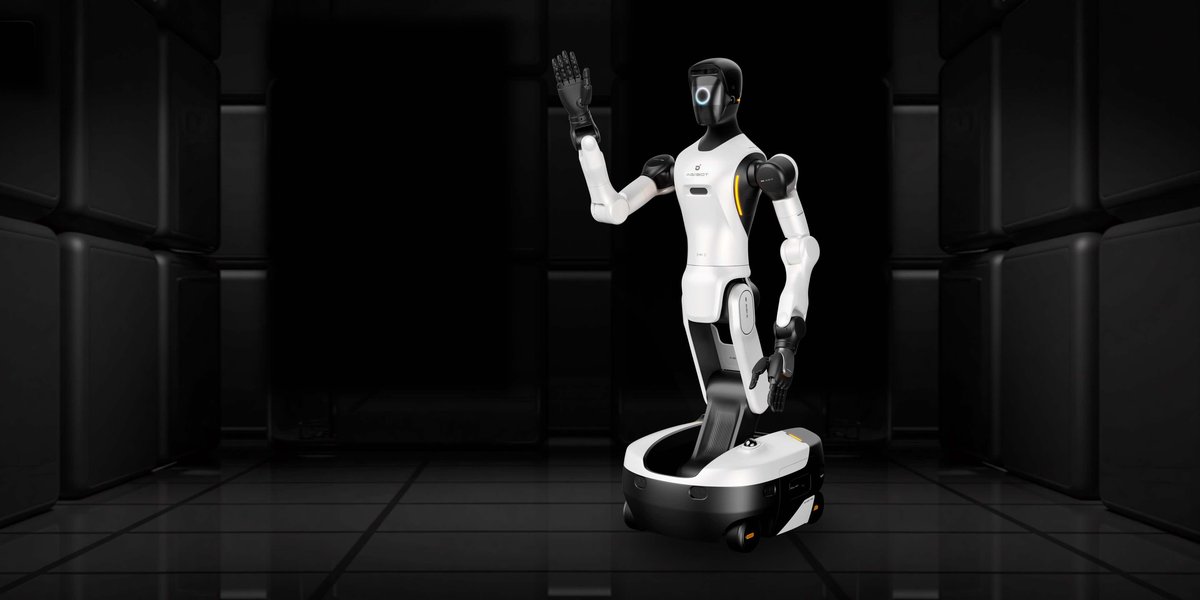
AGIBOT G2
AGIBOT G2 is a commercial wheeled humanoid / embodied operation robot designed for industrial-grade production, flexible material handling and interactive work. Its adjustable-height body combines 26 active degrees of freedom, two 7-DoF force-sensing arms, optional quick-replace dexterous end-effectors and an omnidirectional wheeled chassis, prioritising stability and shift-oriented operation over bipedal walking. The platform integrates multi-modal perception, high onboard compute and Genie RL-based task deployment, while AGIBOT has also used G2 in live factory workflows at Longcheer Technology. Buyers should still validate the exact workflow package, regional certifications, integration scope and safety assessment required for each deployment rather than treating demonstrated trained tasks as fully general autonomy.
View ListingKey benefits
Enable lights-out manufacturing shifts
Increase machine utilisation by 30%+
Improve weld and part quality consistency
Reduce worker exposure to fumes and repetitive strain
Proven in the field
Real deployments, real results — not projections.
Longcheer Technology
AGIBOT G2
Challenge: High-speed electronics lines needed flexible automation, as fixed systems were costly and slow to reconfigure for mixed-model production.
Solution: Multiple AGIBOT G2 robots were integrated into tablet-testing stations to load, unload and sort devices with millimetre-level accuracy.
Result: More than 99% success in continuous operation, reaching up to 310 units per hour with less than 4% downtime loss.
Key selection criteria
ROI analysis
Average Investment
Price on application per cell
Annual Savings
Price on application per year
Payback Period
12–24 months
Frequently asked questions
What does a robotic machine-tending or welding cell cost?
The budget is price on application, ex VAT, per cell installed. Payback is typically 12–24 months — roughly half that if the cell runs multiple shifts, which is where lights-out operation earns its keep.
Which production tasks should we automate first?
Machine tending (CNC, presses, injection moulding) is usually the fastest win: well-defined, repetitive, and it lifts machine utilisation by 30%+. Welding and assembly deliver bigger gains but need more integration work.
Do we need a cobot or a fenced industrial arm?
Depends on speed, payload and how close people work to the cell. Cobots skip the guarding but run slower; industrial arms are faster and stronger but need fencing. Our cobot vs industrial arm comparison walks through the decision.
How precise are these robots?
Typical repeatability is ±0.03–0.05mm. At Longcheer Technology, AGIBOT G2 robots run tablet-testing stations at over 99% success, up to 310 units per hour, around the clock.
Will a robot talk to our existing machines and PLCs?
Machine and PLC communication is a standard selection criterion — most cells integrate via common industrial protocols. RoboMercato handles commissioning, so you're not writing PLC code yourself.
What ongoing costs should we plan for?
Budget roughly 8–12% of purchase price annually for service, plus operator training and spares. Every manufacturer we list is vetted for deployment readiness and service coverage.
Where manufacturing robots fit
Explore related areas to find the right robot for your operation.
Common industries
Ready to automate your production line?
Answer a few questions about your site and budget; we'll shortlist robots that fit. About 3 minutes.