
Public Safety & Hazardous Environment Robots
Bomb Disposal, Firefighting & Hazardous-Site Response
Last updated 29 September 2026
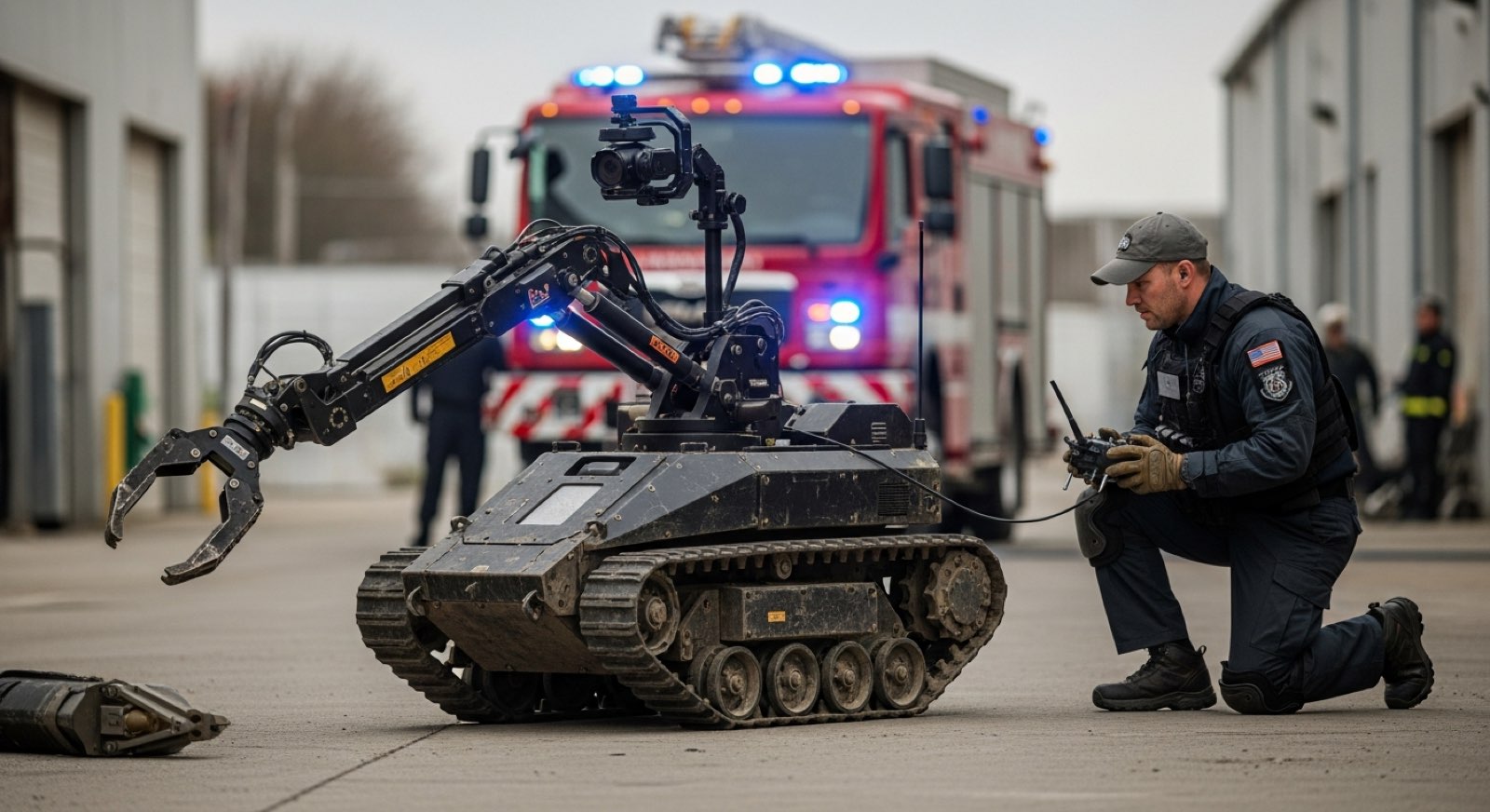
What are public safety robots?
Public safety robots operate in environments too dangerous for people — investigating suspicious devices, entering fires or chemical spills, and inspecting confined or contaminated spaces — protecting first responders and site workers.
Best public safety robots in the UK
View all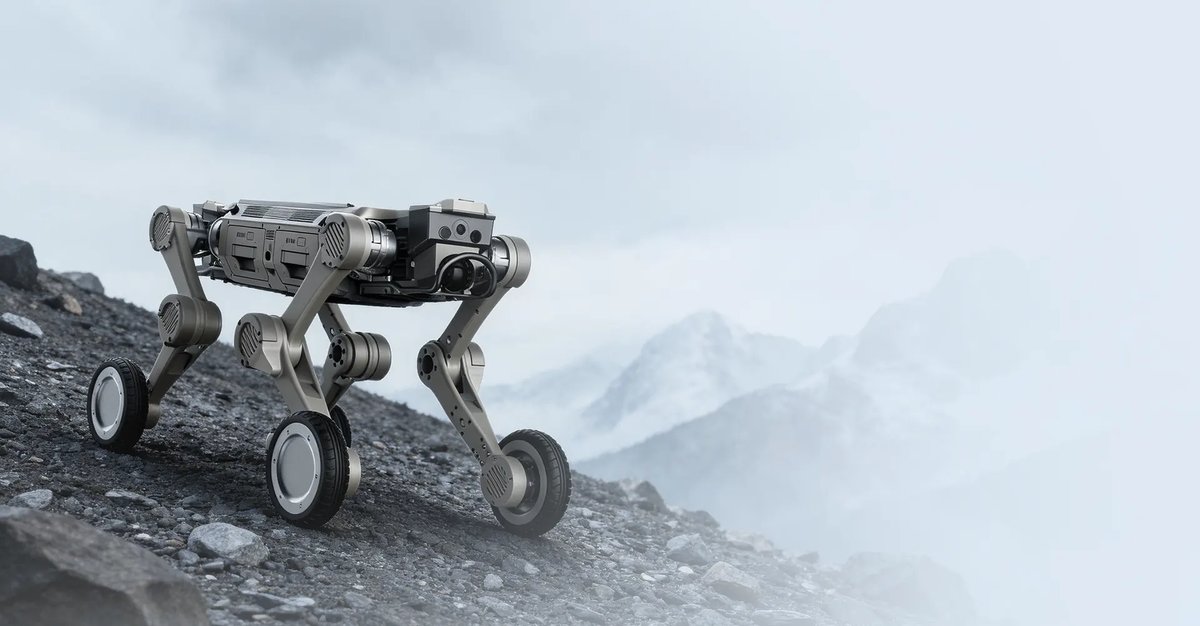
AGIBOT D1 Max IP67
The AGIBOT D1 Max IP67 is an industrial wheel-legged quadruped designed for logistics, remote task execution and search-and-rescue support across demanding indoor and outdoor terrain. It combines a 25 kg rated payload, 6 m/s maximum speed, up to 5 hours of unloaded operation and dual hot-swappable batteries with IP67 protection and a -20°C to 55°C operating range. Dual 96-channel LiDARs, front and rear 8 MP cameras, GNSS RTK, an automotive-grade IMU and ultrasonic sensing provide a strong perception foundation, while the SDK and extensive power/data interfaces support custom payload and autonomy development. Its wheel/leg mode switching, 45-degree climbing angle, 25 cm continuous stair capability and 80 cm maximum obstacle height make it suitable for industrial sites where wheeled efficiency and legged terrain access are both required.
View Listing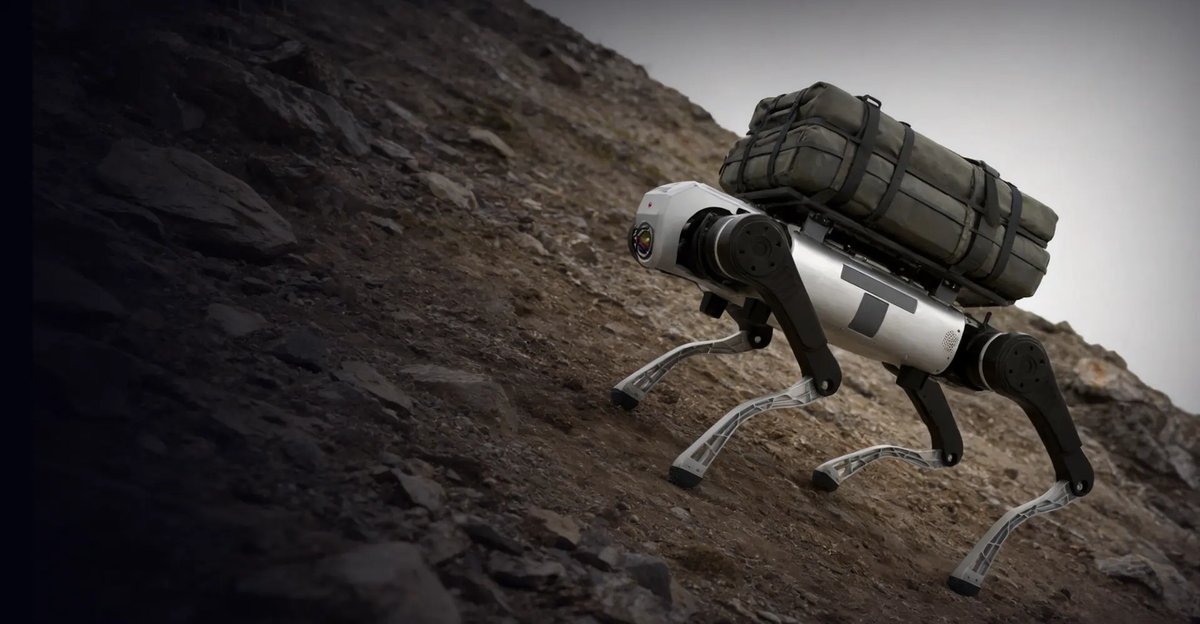
AGIBOT D1 MaxPro IP67
The AGIBOT D1 MaxPro IP67 is a heavy-duty industrial quadruped designed for sustained payload transport, material handling, emergency-response support and custom remote or autonomous operations. It carries a rated 50 kg payload while weighing 68 kg, uses a 2,081 Wh battery, and delivers 5.5 ± 0.5 hours unloaded or at least 2 hours under a 50 kg load, with a published operational range of 21 ± 1 km unloaded and 11 ± 1 km at full load. The platform climbs continuous stairs up to 30 cm, including open-riser industrial stairs, supports self-righting after a fall, and is rated for 45-degree slopes. IP67 protection, operation from -20°C to 55°C and published operation in water up to 20 cm deep support harsh-site deployment. A 117 TOPS GPU compute module, front 96-channel LiDAR, front and rear wide-angle cameras, automotive-grade IMU, TCP/ROS SDK and extensive power/data interfaces provide an industrial base for integrator-developed payloads and autonomy.
View Listing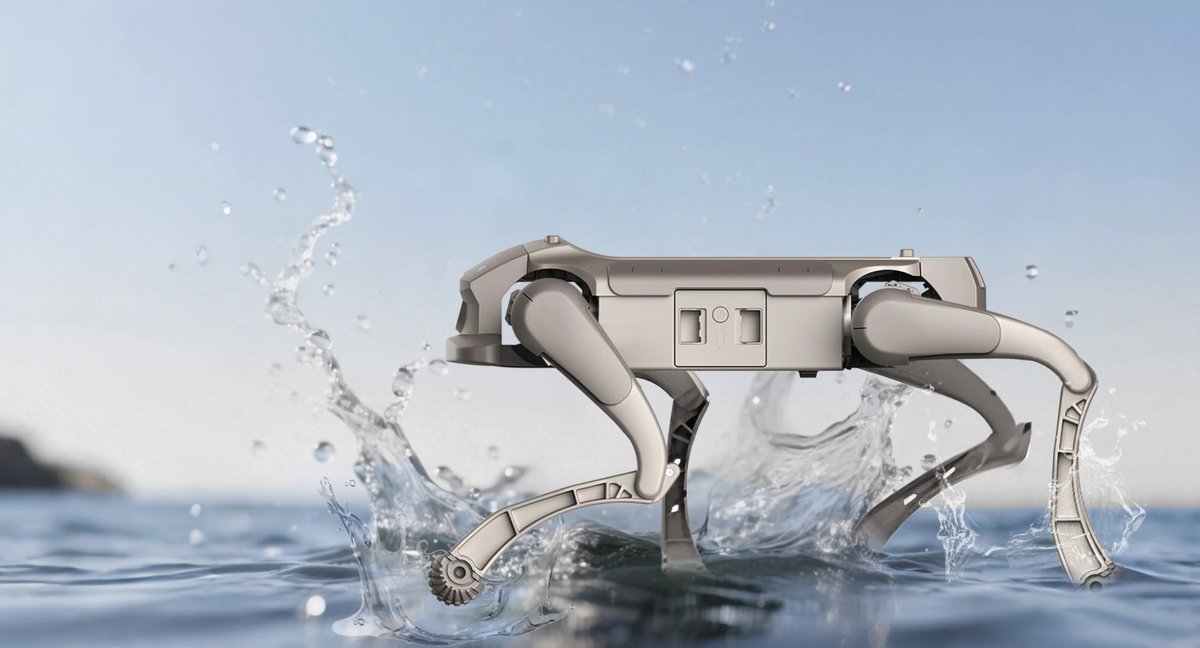
AGIBOT D1 Ultra IP54
The AGIBOT D1 Ultra IP54 is a compact industrial quadruped designed for security, inspection, emergency-response support, research and custom payload applications. It weighs 15.5 kg, carries a rated 5 kg payload, reaches 3.7 m/s and provides 1-2 hours of runtime with a published range of 6 ± 1 km. Reinforcement-learning gait control supports self-balancing, anti-tipping and disturbance rejection, with continuous stair climbing up to 16 cm, jumps up to 35 cm, and slopes rated at 30° in standard conditions or 40° in extreme conditions. IP54 protection, sealed and anti-corrosion core components, and operation from 0°C to 40°C support deployment around dust, splashes, damp, mud and sand. A 12-DoF platform, 8-core CPU, 1080p wide-field camera, IMU, M4 payload mounting, Gigabit Ethernet, USB, power, SBUS and UART interfaces, and an open high-/low-level SDK provide a strong base for integrator-developed sensing, teleoperation and autonomy. Intelligent following, mapping, patrol and autonomous navigation require secondary development and optional sensors.
View Listing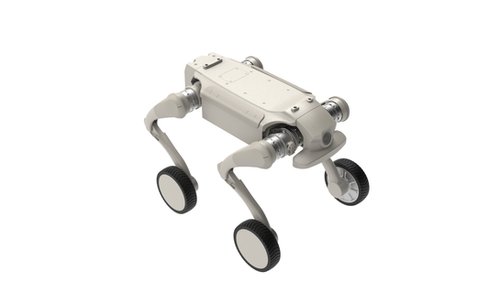
AGIBOT D1 Ultra-W IP54
The AGIBOT D1 Ultra-W IP54 is a compact wheeled-legged quadruped platform for inspection, security, emergency-response support, research and custom payload development. AGIBOT's official Ultra-W development guide specifies a 22 kg body, 16 total degrees of freedom (four per leg), a 5 kg rated payload, 3.7 m/s maximum speed, 1-2 hours of runtime and 9 km range. Its hybrid mobility envelope includes continuous stair climbing up to 16 cm, a 35 cm jump, maximum climbing height of 60 cm, and 30° standard or 40° extreme-condition slope capability. The 43.2 V, 4.6 Ah battery charges in about one hour. IP54 protection and a 0°C to 40°C operating range support mixed indoor and sheltered outdoor work. A 1080p wide-field camera, standard IMU, Wi-Fi 5.0, Bluetooth 5.0, Gigabit Ethernet, USB, power, SBUS and UART interfaces, real-time video and an official high-level SDK support teleoperation and secondary development. Packaged autonomous navigation, obstacle avoidance, fleet management and autonomous charging are not published as standard functions.
View Listing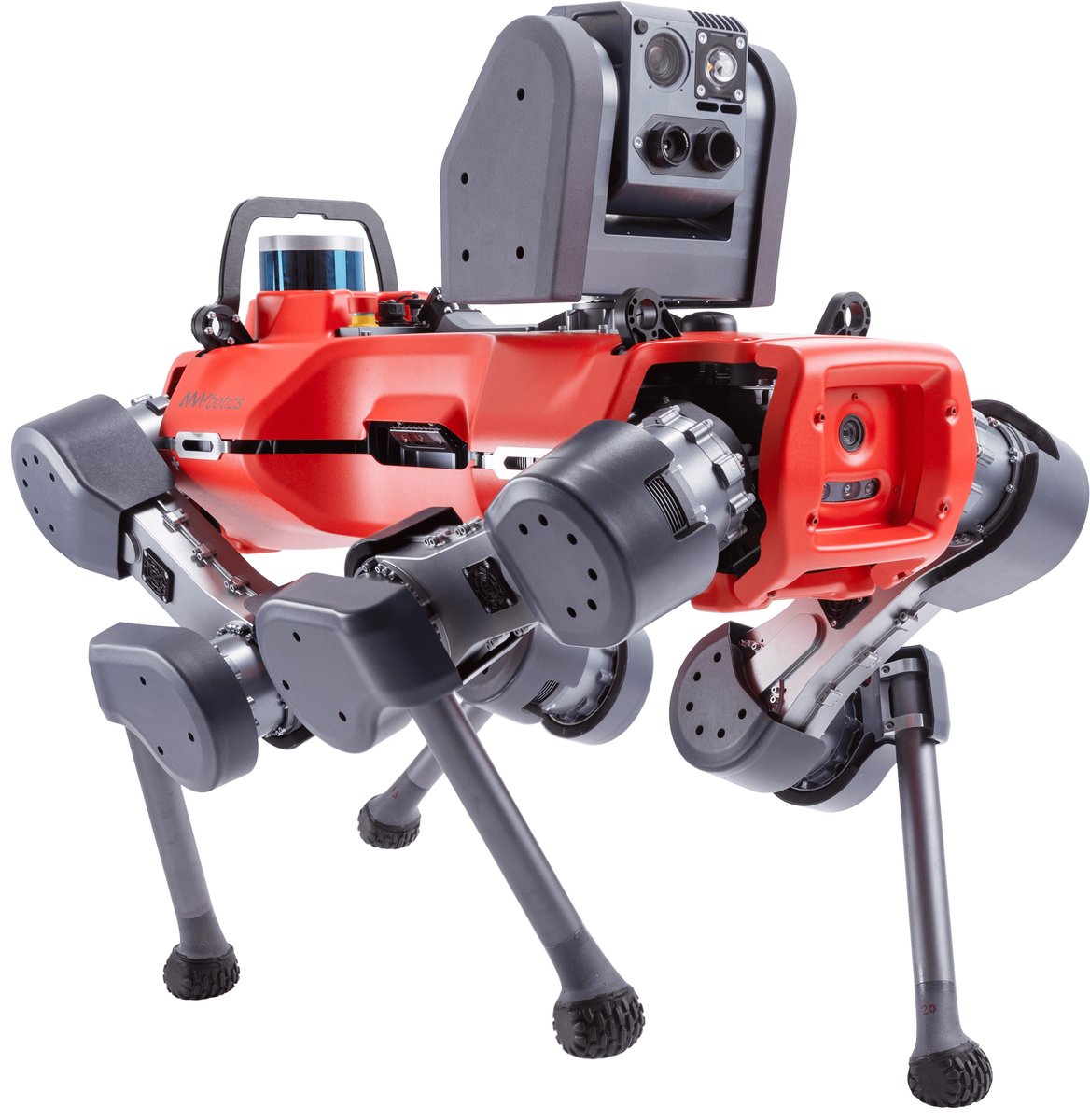
ANYbotics ANYmal D
ANYmal is an autonomous inspection quadruped engineered for harsh, industrial sites. It captures repeatable data (thermal, acoustic, visual), improving uptime and worker safety.
View Listing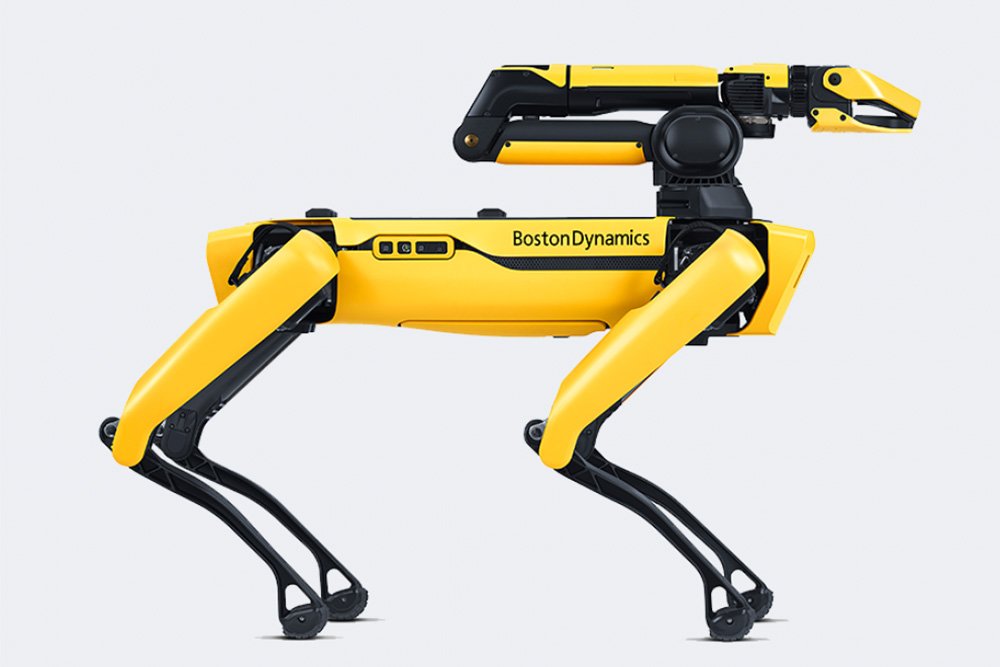
Boston Dynamics Spot
Spot is a proven industrial quadruped for inspection and data capture. It climbs stairs, handles rough terrain and carries modular payloads for repeatable autonomous routes across plants, sites and tunnels.
View Listing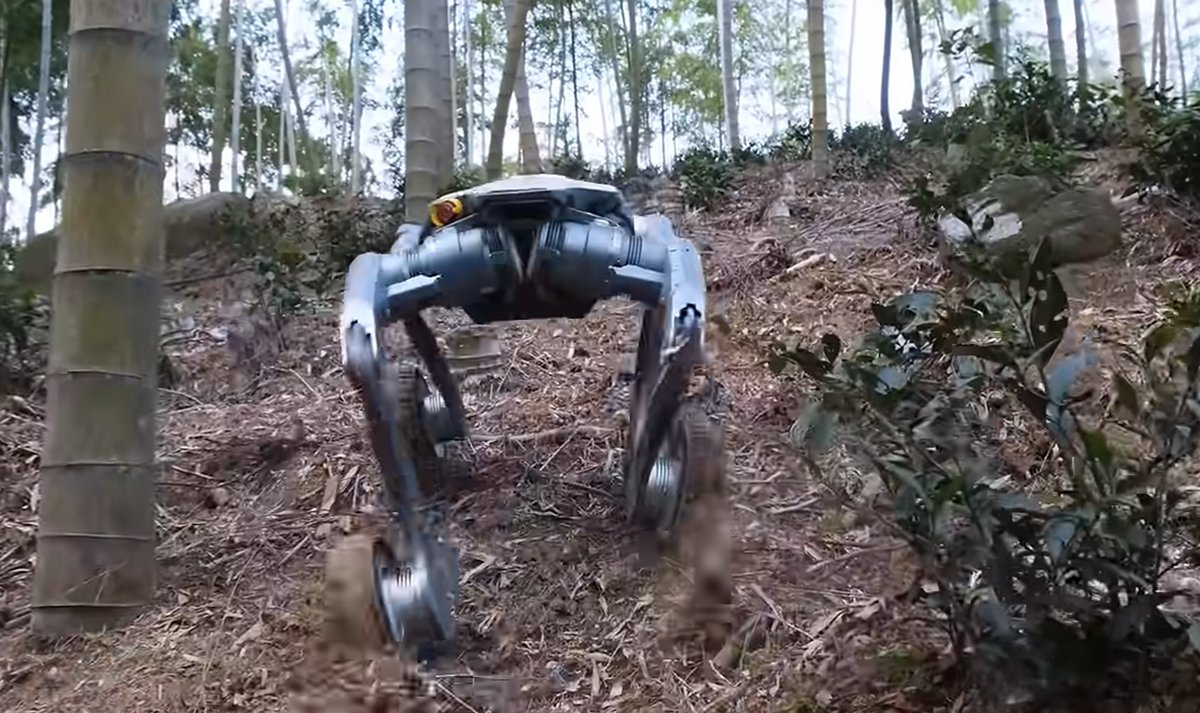
DEEP Robotics DEEPRoboticsLynx
DEEPRoboticsLynx is a compact wheel-legged all-terrain quadruped designed to combine the speed and range of wheels with the obstacle access and posture control of articulated legs. It carries up to 12 kg, reaches 5 m/s, runs for up to 3 hours or 15 km, and can negotiate continuous 22 cm steps and platforms up to 80 cm. Its official configuration includes dual hot-swappable batteries, a 1080p wide-angle camera, Wi-Fi image transmission, GPS, app and handheld-remote support, IP54 protection and operation from -10 to 40 deg C. For buyers, its main value is fast mixed-terrain mobility for payload transport, remote field observation, exploration and access to routes that are inefficient for conventional AMRs or foot-only quadrupeds.
View Listing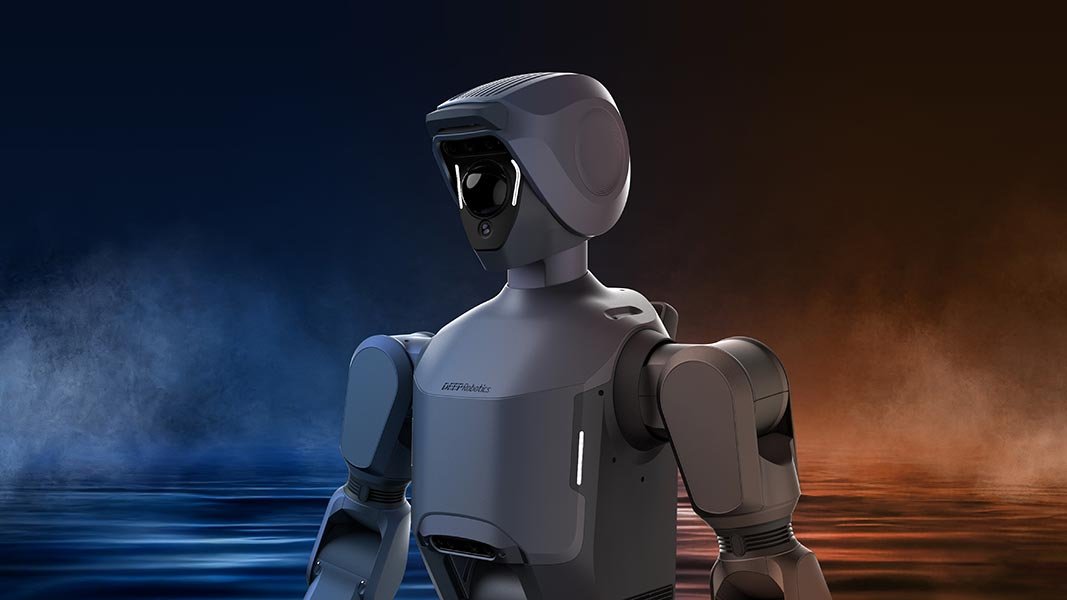
DEEP Robotics DR02
DEEP Robotics DR02 is a commercial industrial-grade bipedal humanoid designed for demanding indoor and outdoor work rather than only controlled laboratory demonstrations. The standard DR02 stands 1.75 m tall, weighs 65 kg with battery, has 21 active DoF, carries up to 10 kg with both arms, uses a 1,440 Wh swappable battery and is protected to IP66 across a -20°C to 55°C operating range. It walks at up to 1.5 m/s for normal operation, with a 4 m/s laboratory extreme test figure, and is rated for 25 cm continuous stairs and 20° slopes. The platform supports motion development, OTA updates, autonomous navigation and intelligent obstacle avoidance, while exact runtime, single-arm payload, end-effector package and regional certifications should still be confirmed for each deployment.
View Listing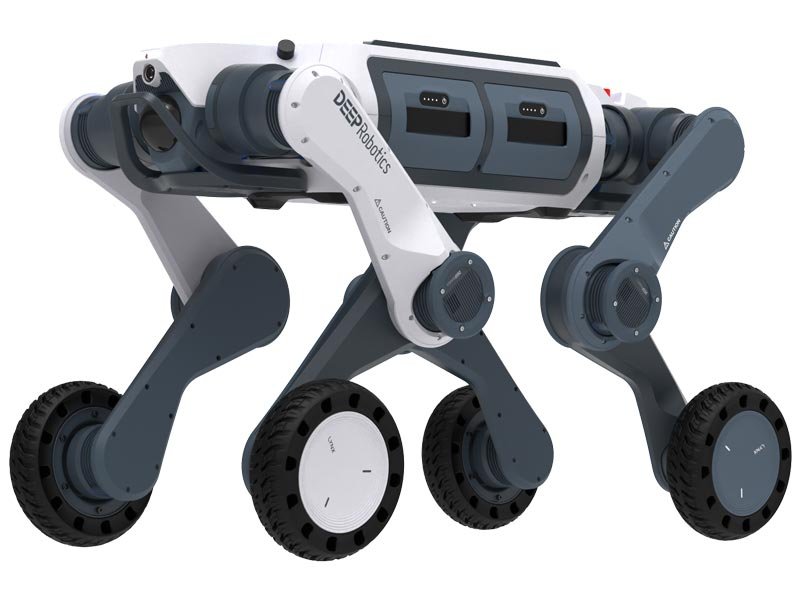
DEEP Robotics LYNX M20
The DEEP Robotics LYNX M20 is an industrial wheel-legged quadruped designed for power inspection, emergency rescue, logistics delivery, scientific exploration and other work across difficult terrain. It combines wheeled speed with legged mobility, carrying a rated 15 kg payload while operating across stairs, steep slopes, mountains, wetlands, rubble and narrow passages. The current official specification adds dual 96-line LiDAR, wide-angle cameras, autonomous navigation, omnidirectional obstacle avoidance, IP66 protection, hot-swappable batteries and optional autonomous charging. For operators, its main value is covering larger and harder-to-access sites while reducing repeated human entry into hazardous or physically demanding environments.
View ListingKey benefits
Keep first responders out of harm’s way
Provide real-time sensor data from hazardous zones
Operate in conditions humans cannot safely enter
Support faster, safer incident response
Key selection criteria
ROI analysis
Average Investment
Price on application per unit
Annual Savings
Risk reduction & incident cost avoidance
Payback Period
Programme/mission-dependent
Frequently asked questions
What do hazardous-environment robots cost?
Price on application per unit. The return isn't a payback period — it's risk reduction and incident cost avoidance, which is how most agencies budget them.
What conditions can they operate in?
Environmental hardening covers heat, chemical exposure and radiation resistance. These machines enter fires, spills and contaminated or confined spaces people can't safely reach.
What sensors do they carry?
Gas detection, radiation monitoring, thermal imaging and HD video — streaming real-time data from the hazard zone to operators at a safe distance.
How far away can operators be?
Remote-operation range and link reliability are primary selection criteria; we spec robots to your operational distances and interference environment.
Can public bodies procure through RoboMercato?
Yes — we support public-sector procurement processes, and our finance partners can structure acquisition to fit programme budgets.
Where public safety robots fit
Explore related areas to find the right robot for your operation.
Common industries
Ready to automate your response work?
Answer a few questions about your site and budget; we'll shortlist robots that fit. About 3 minutes.