
Telepresence & Remote Operation Robots
Remote Presence, Inspection & Tele-Operated Assistance
Last updated 29 September 2026

What are telepresence robots?
Telepresence and remote-operation robots let a person virtually "be present" in another location — attending meetings, touring facilities, or operating machinery remotely — combining live video, audio, and sometimes remote manipulation.
Best telepresence robots in the UK
View all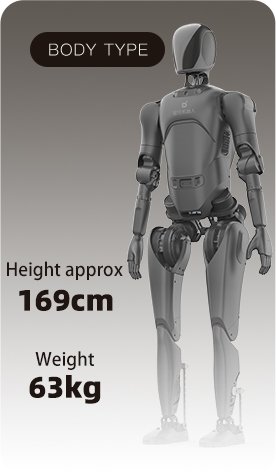
AGIBOT A2 Lite
The AGIBOT A2 Lite is a full-size humanoid designed primarily for entertainment, commercial performance and creative motion programming. It stands 1.69 m tall, weighs about 64 kg and has 23 total degrees of freedom, with a published maximum arm load of approximately 2 kg. Its strongest capabilities are full-body performance, configurable group-control routines, smart OTA updates and optional VR teleoperation that can record and reproduce custom motions without coding. Unlike the higher-spec A2 Ultra, the official A2 Lite specification does not list a standard LiDAR/camera perception stack or autonomous navigation, so its clearest near-term fit is supervised operation in controlled stages, venues, demonstrations and creative-development environments.
View Listing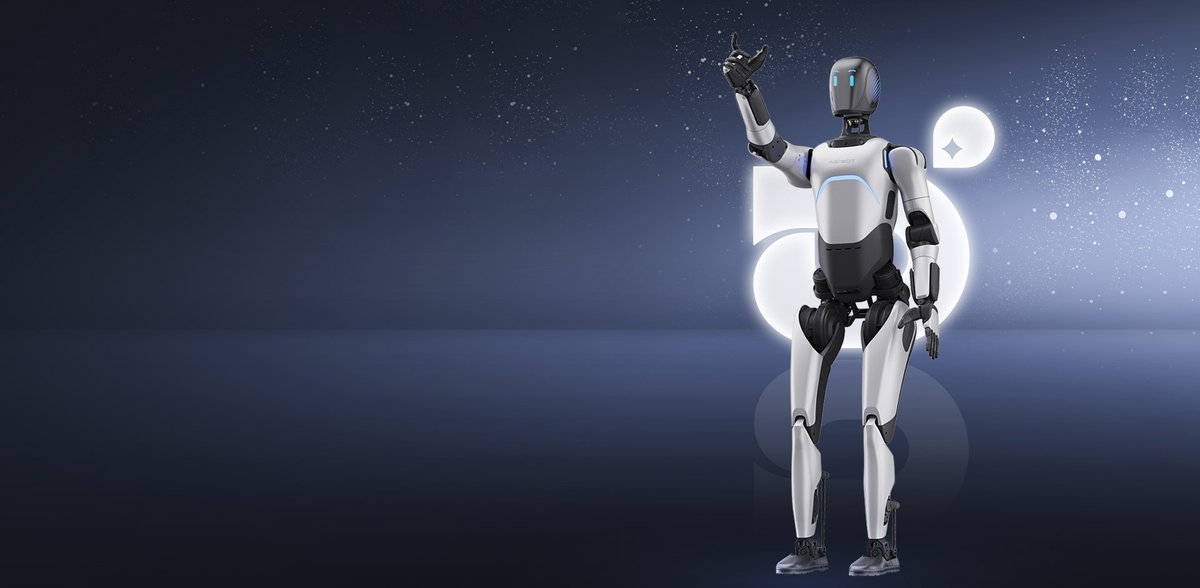
AGIBOT A2 Ultra
The AGIBOT A2 Ultra is a full-size commercial humanoid designed for interactive reception, route guidance, exhibitions, brand activations and performance-oriented deployments. It stands 1.69 m tall, weighs about 69 kg and has 40 total degrees of freedom, including 6-DoF dexterous hands, with autonomous navigation, obstacle avoidance, multimodal interaction and facial-recognition-based proactive greeting. AGIBOT positions the platform as commercially scaled, citing more than one thousand units deployed in real-world operations, international CR/CE/FCC certifications and long-duration mobility demonstrations including a 106.286 km walking record. Its strongest near-term fit is supervised or configured operation in commercial venues and research/development settings rather than unrestricted general-purpose autonomous work.
View Listing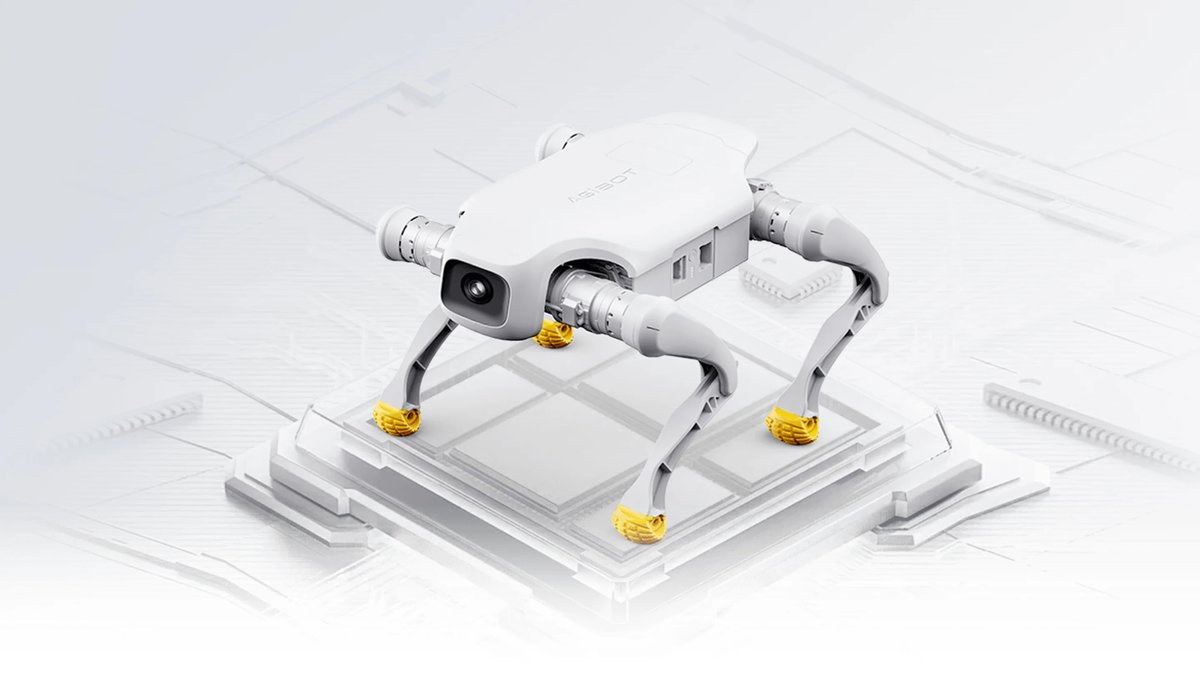
AGIBOT D1 Edu
The AGIBOT D1 Edu is a compact quadruped development platform designed for scientific research, education, custom payload integration and remote-control experimentation. It weighs 15.5 kg, carries a 5 kg effective payload, reaches 3.5 m/s and runs for approximately 1-2 hours, with reinforcement-learning-based gait control for varied terrain, 16 cm continuous stair climbing and 35 cm jumping. Unlike the D1 Pro, the Edu variant supports secondary development through an SDK, standardized Ethernet, USB, power, SBUS and UART interfaces, URDF models, and Isaac Sim and MuJoCo workflows. It is primarily a remotely operated developer platform: autonomous following, navigation, inspection or patrol functions require customer development and appropriate sensors or communication modules.
View Listing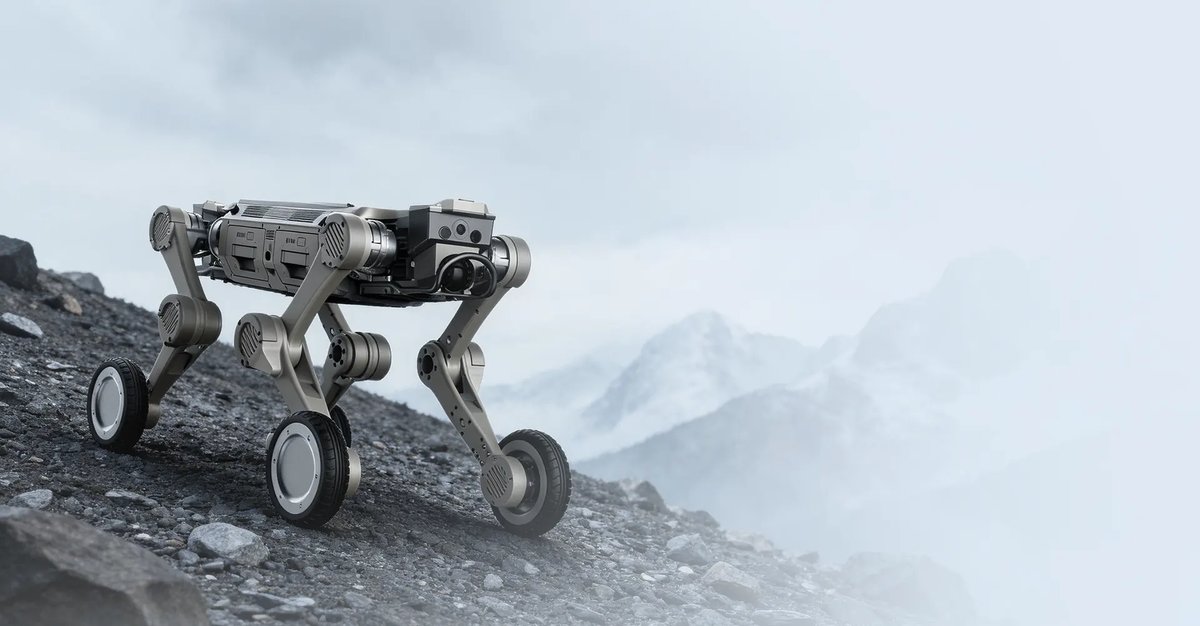
AGIBOT D1 Max IP67
The AGIBOT D1 Max IP67 is an industrial wheel-legged quadruped designed for logistics, remote task execution and search-and-rescue support across demanding indoor and outdoor terrain. It combines a 25 kg rated payload, 6 m/s maximum speed, up to 5 hours of unloaded operation and dual hot-swappable batteries with IP67 protection and a -20°C to 55°C operating range. Dual 96-channel LiDARs, front and rear 8 MP cameras, GNSS RTK, an automotive-grade IMU and ultrasonic sensing provide a strong perception foundation, while the SDK and extensive power/data interfaces support custom payload and autonomy development. Its wheel/leg mode switching, 45-degree climbing angle, 25 cm continuous stair capability and 80 cm maximum obstacle height make it suitable for industrial sites where wheeled efficiency and legged terrain access are both required.
View Listing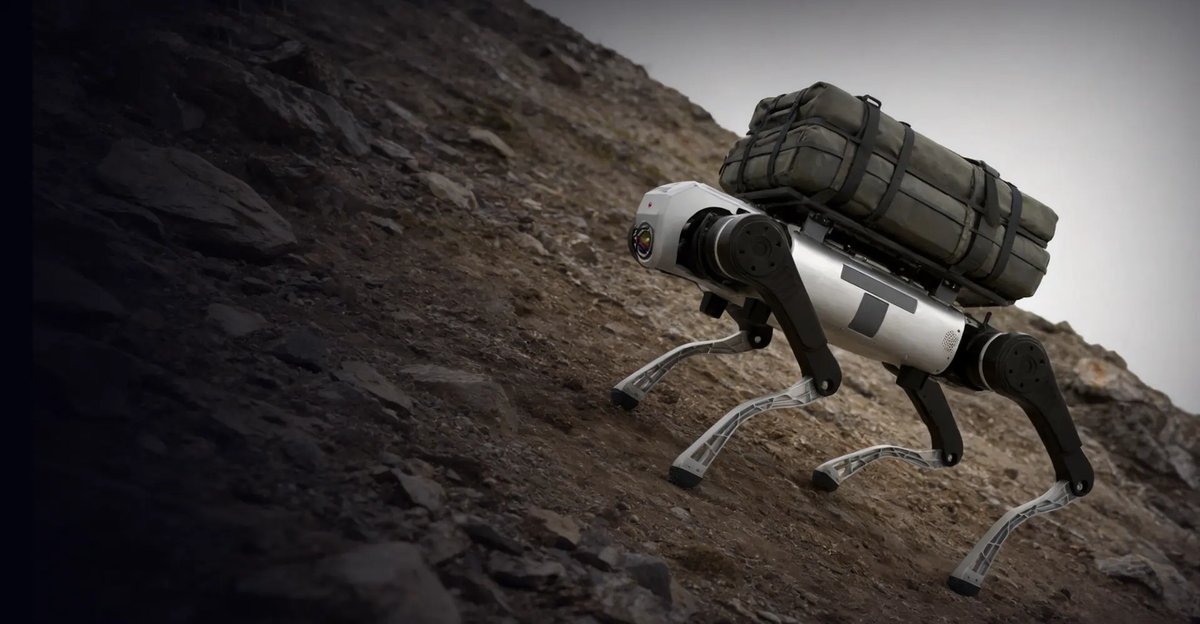
AGIBOT D1 MaxPro IP67
The AGIBOT D1 MaxPro IP67 is a heavy-duty industrial quadruped designed for sustained payload transport, material handling, emergency-response support and custom remote or autonomous operations. It carries a rated 50 kg payload while weighing 68 kg, uses a 2,081 Wh battery, and delivers 5.5 ± 0.5 hours unloaded or at least 2 hours under a 50 kg load, with a published operational range of 21 ± 1 km unloaded and 11 ± 1 km at full load. The platform climbs continuous stairs up to 30 cm, including open-riser industrial stairs, supports self-righting after a fall, and is rated for 45-degree slopes. IP67 protection, operation from -20°C to 55°C and published operation in water up to 20 cm deep support harsh-site deployment. A 117 TOPS GPU compute module, front 96-channel LiDAR, front and rear wide-angle cameras, automotive-grade IMU, TCP/ROS SDK and extensive power/data interfaces provide an industrial base for integrator-developed payloads and autonomy.
View Listing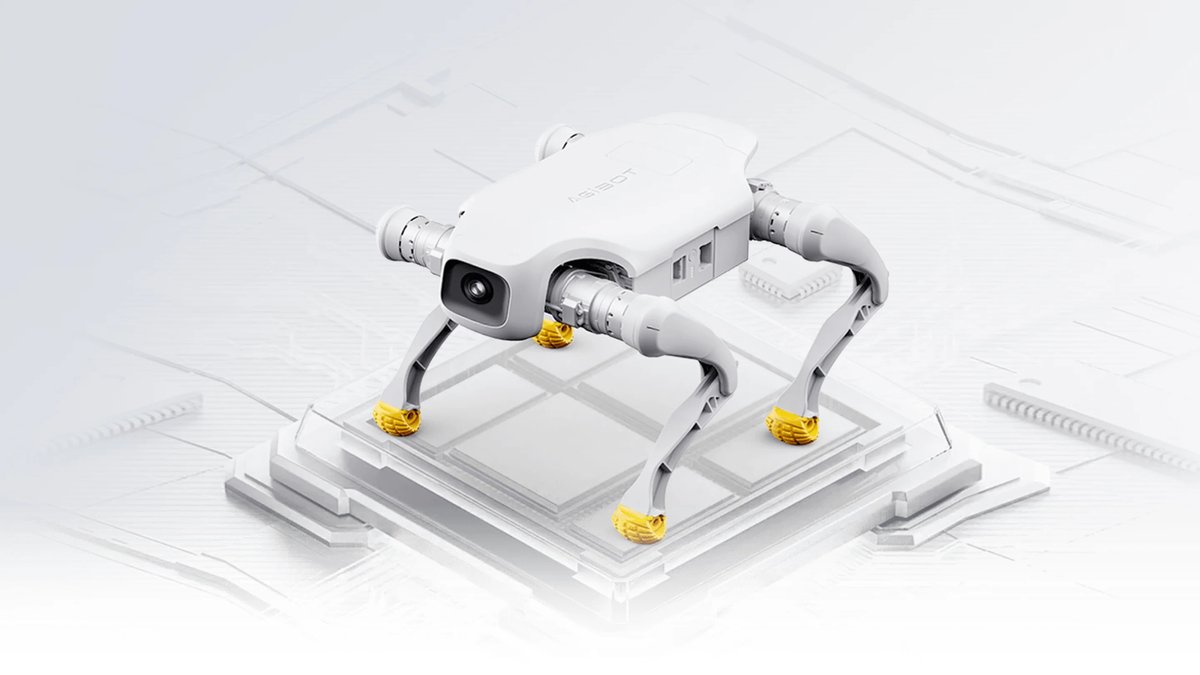
AGIBOT D1 Pro
The AGIBOT D1 Pro is a compact, remotely operated quadruped designed for agile demonstrations, light-item carriage, education and remotely supervised inspection or security experiments. It weighs 15.5 kg, carries a 5 kg effective payload, reaches 3.5 m/s and operates for approximately 1-2 hours, with reinforcement-learning-based gait control, 16 cm continuous stair climbing and a 35 cm vertical jump. The supplied joystick controller and real-time image transmission support straightforward teleoperation, while the 48 N·m joints, self-balancing and anti-fall behaviours support dynamic movement across varied ground surfaces. Unlike the D1 Edu, the Pro version does not support an SDK or functional expansion ports, so buyers should treat it as an out-of-the-box remote platform rather than a secondary-development robot.
View Listing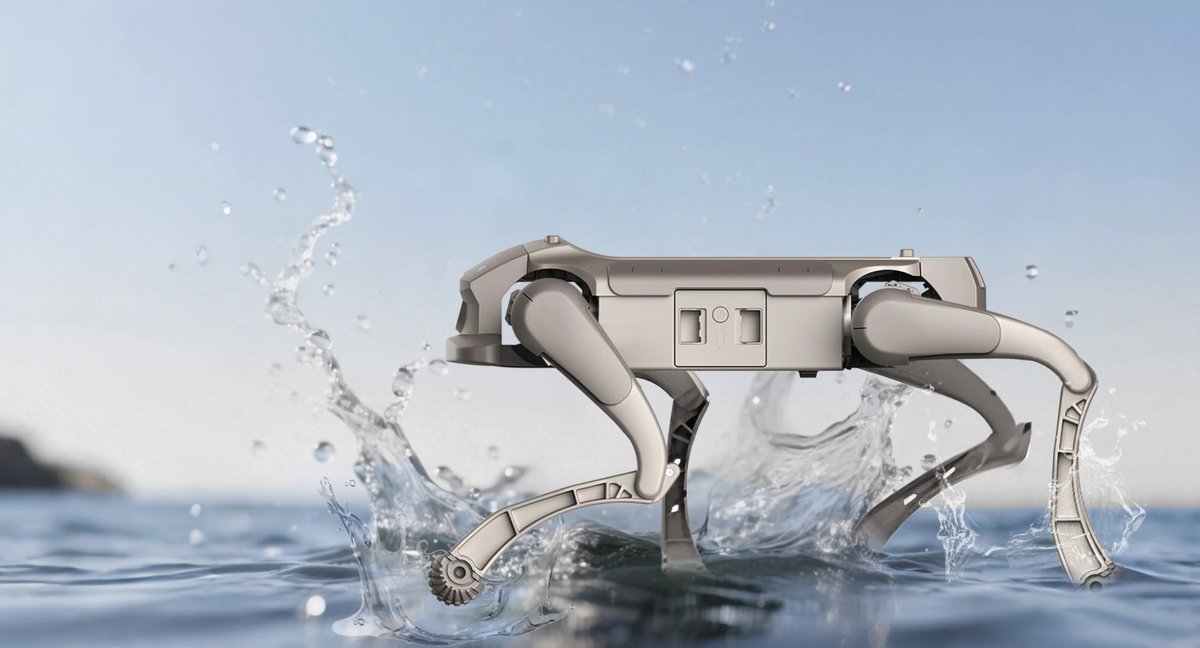
AGIBOT D1 Ultra IP54
The AGIBOT D1 Ultra IP54 is a compact industrial quadruped designed for security, inspection, emergency-response support, research and custom payload applications. It weighs 15.5 kg, carries a rated 5 kg payload, reaches 3.7 m/s and provides 1-2 hours of runtime with a published range of 6 ± 1 km. Reinforcement-learning gait control supports self-balancing, anti-tipping and disturbance rejection, with continuous stair climbing up to 16 cm, jumps up to 35 cm, and slopes rated at 30° in standard conditions or 40° in extreme conditions. IP54 protection, sealed and anti-corrosion core components, and operation from 0°C to 40°C support deployment around dust, splashes, damp, mud and sand. A 12-DoF platform, 8-core CPU, 1080p wide-field camera, IMU, M4 payload mounting, Gigabit Ethernet, USB, power, SBUS and UART interfaces, and an open high-/low-level SDK provide a strong base for integrator-developed sensing, teleoperation and autonomy. Intelligent following, mapping, patrol and autonomous navigation require secondary development and optional sensors.
View Listing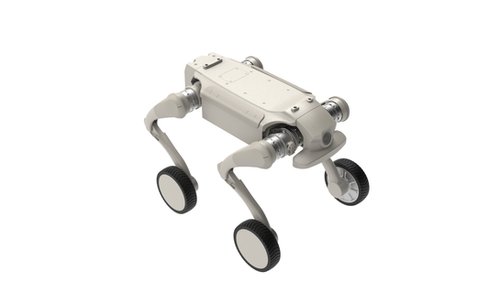
AGIBOT D1 Ultra-W IP54
The AGIBOT D1 Ultra-W IP54 is a compact wheeled-legged quadruped platform for inspection, security, emergency-response support, research and custom payload development. AGIBOT's official Ultra-W development guide specifies a 22 kg body, 16 total degrees of freedom (four per leg), a 5 kg rated payload, 3.7 m/s maximum speed, 1-2 hours of runtime and 9 km range. Its hybrid mobility envelope includes continuous stair climbing up to 16 cm, a 35 cm jump, maximum climbing height of 60 cm, and 30° standard or 40° extreme-condition slope capability. The 43.2 V, 4.6 Ah battery charges in about one hour. IP54 protection and a 0°C to 40°C operating range support mixed indoor and sheltered outdoor work. A 1080p wide-field camera, standard IMU, Wi-Fi 5.0, Bluetooth 5.0, Gigabit Ethernet, USB, power, SBUS and UART interfaces, real-time video and an official high-level SDK support teleoperation and secondary development. Packaged autonomous navigation, obstacle avoidance, fleet management and autonomous charging are not published as standard functions.
View Listing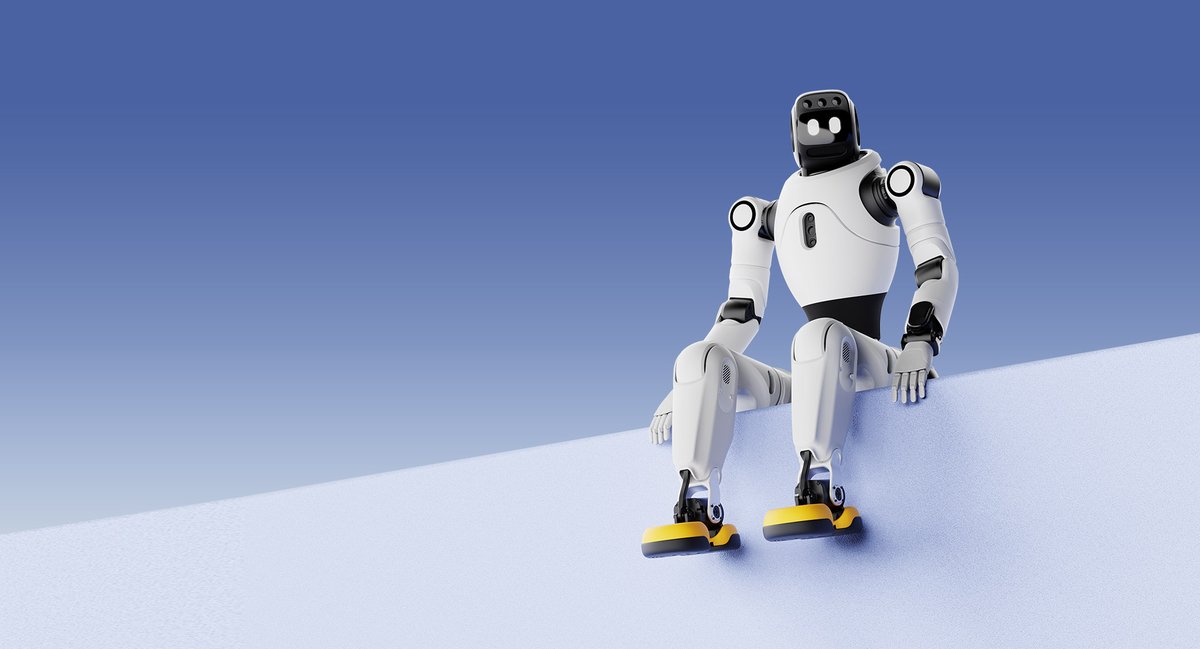
AGIBOT X2
The AGIBOT X2 is the standard model in AGIBOT's compact X2 humanoid series, designed primarily for human interaction, dynamic movement and supervised customer-facing or entertainment scenarios. It stands about 1.31 m tall, weighs about 35 kg and has 25 degrees of freedom, supporting humanoid gait, complex dance routines and coordinated expressive movement. The standard X2 provides an interactive RGB camera, head-touch sensing, microphone array, speaker, interactive display, mobile-app support, OTA updates, direct charging and a swappable battery with approximately two hours of walking runtime. It is important to distinguish the standard X2 from X2 Ultra: the standard X2 does not include LiDAR, RGB-D perception, autonomous navigation, proactive obstacle avoidance, automatic charging or secondary-development support as standard.
View ListingKey benefits
Reduce business travel costs and time
Enable remote experts to support on-site teams
Provide flexible remote workforce presence
Support remote facility tours and audits
Key selection criteria
ROI analysis
Average Investment
Price on application per robot
Annual Savings
Price on application per year
Payback Period
9–18 months
Frequently asked questions
What does a telepresence robot cost?
Price on application — among the cheapest robots we list — with savings of Price on application a year, mostly from avoided travel. Payback typically lands in 9–18 months.
How is this better than a video call?
Mobility and presence: the remote person moves through the facility, inspects what they choose, and interacts naturally rather than seeing only what someone points a camera at. For audits, tours and expert support, that difference is the product.
What connectivity does it need?
Solid WiFi or cellular/5G coverage along the routes the robot travels. Latency and video quality are the specs to compare hardest.
Is the connection secure?
Connection security is a standard selection criterion — we flag robots with enterprise-grade encryption and access controls for sensitive facilities.
What are the main business uses?
Remote factory and site audits, expert support to on-site teams without flights, facility tours for customers or investors, and flexible remote presence for distributed teams.
Where telepresence robots fit
Explore related areas to find the right robot for your operation.
Common industries
Ready to automate your remote presence?
Answer a few questions about your site and budget; we'll shortlist robots that fit. About 3 minutes.